UNITORA Honten : Amazing Uni Sea Urchin Sushi Bowl Donburi in Tsukiji
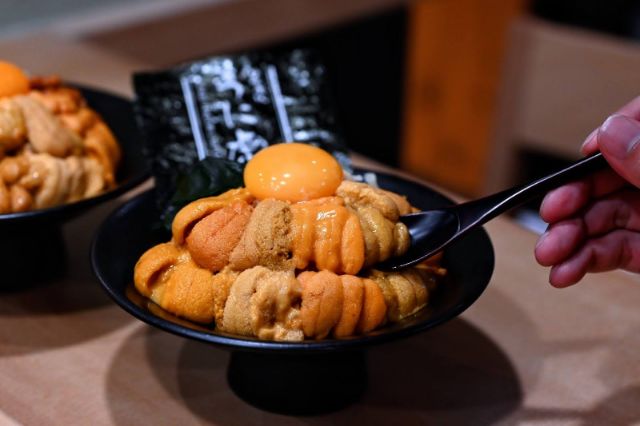

Opening
About Unitora
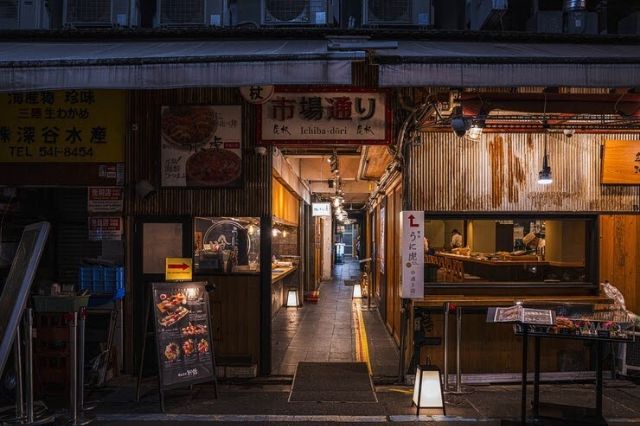
As early as 7am, the staff at Unitora open their doors to guests at the market and start serving heaping bowls of uni. They’ll continue until the sun is long set, with hundreds of satisfied customers coming through day after day. Experiencing so much premium uni in one place is very rare, even in Japan. Some visitors praise Unitora’s variety of production regions and subtle flavors while others gasp at the overflowing bowls of seafood that offer a once in a lifetime uni experience.
Unitora Honten
Closed: None
Average price: [Dinner] 10,000 JPY
Access: Get off at Tsukiji Station on the Tokyo Metro Hibiya Line or Tsukijishijo Station on the Toei Oedo Line.
Address: 1F, mihiro Bldg., 4-10-5, Tsukiji, Chuo-ku, Tokyo Map
More Details Reservation
What is Unidon?
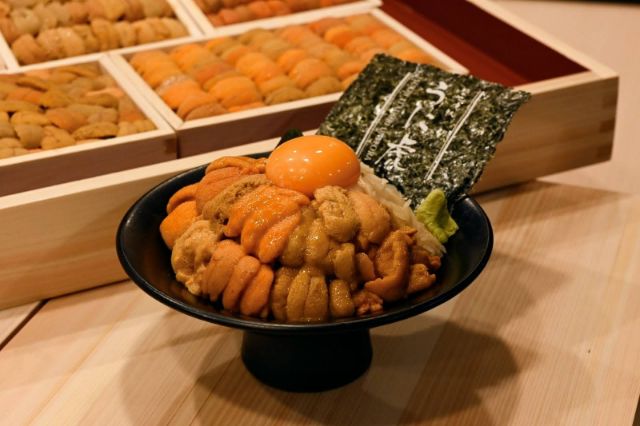
Uni has a creamy texture with a unique pungency that can range from slightly bitter to mild and rich. It’s a must-try ingredient when visiting Japan, and having a tabekurabe of different kinds of uni can help you find your favorite production regions and qualities.
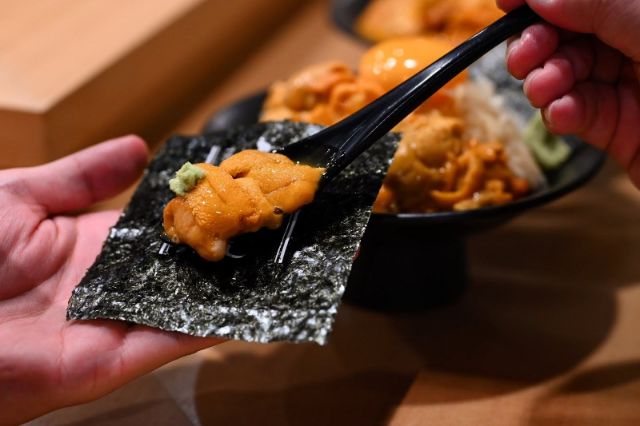
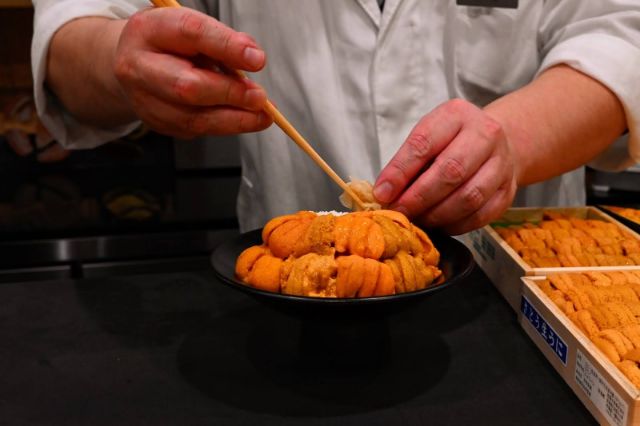
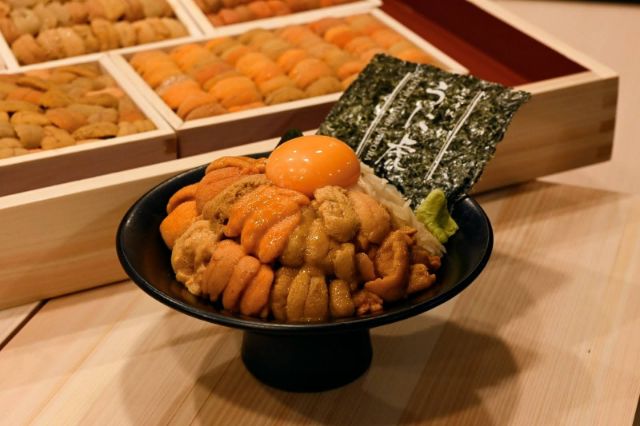
The uni is high quality, so most of it leans towards the rich and mild side of the flavor spectrum. The soft petals melt in your mouth and into the warm rice, making the texture almost like a risotto as you eat. Each bowl comes with a slice of nori printed with the UNITORA logo in white calcium, so you can try making your own hand-rolls as well!
About Unitora
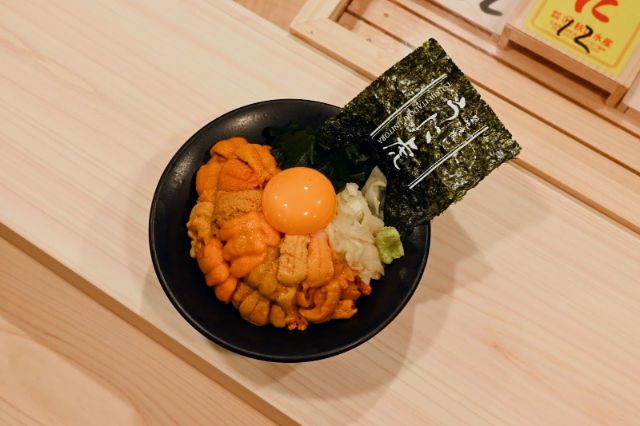
Even as new restaurants seem to open all the time – an unagi and a blue-fin tuna specialist are on the way – their uni specialty is unmatched. You’ll find Unitora brand restaurants in Ikebukuro and Toyosu, Karuizawa, and even as far as Bangkok, Thailand – but there’s something that brings guests back over and over to the Tsukiji location.
The staff, who are not only skilled chefs but also genuinely passionate about uni, recall being surprised that visitors often seem shy when they visit Unitora. They invite guests to ask questions and get curious. They might not be fluent in your language, but the knowledgeable and friendly staff are more than happy to offer a warm welcome and some valuable uni education.
Unitora Honten
Closed: None
Average price: [Dinner] 10,000 JPY
Access: Get off at Tsukiji Station on the Tokyo Metro Hibiya Line or Tsukijishijo Station on the Toei Oedo Line.
Address: 1F, mihiro Bldg., 4-10-5, Tsukiji, Chuo-ku, Tokyo Map
More Details Reservation
Learn About Uni with Unitora Tips
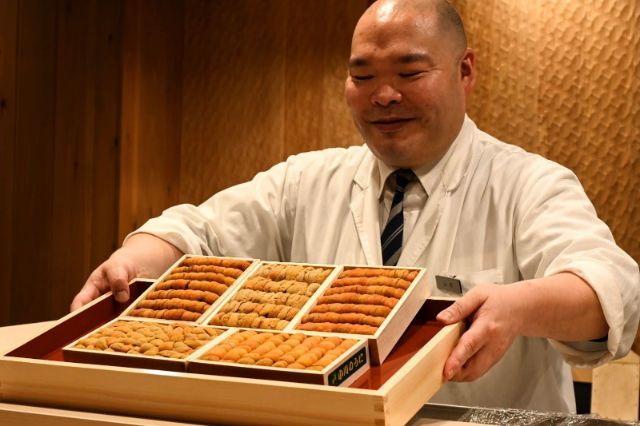
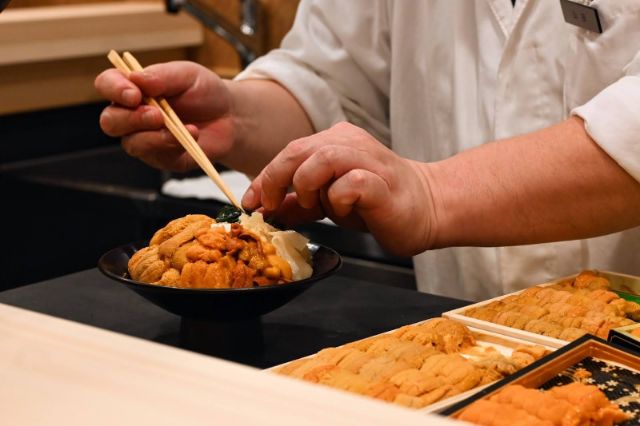
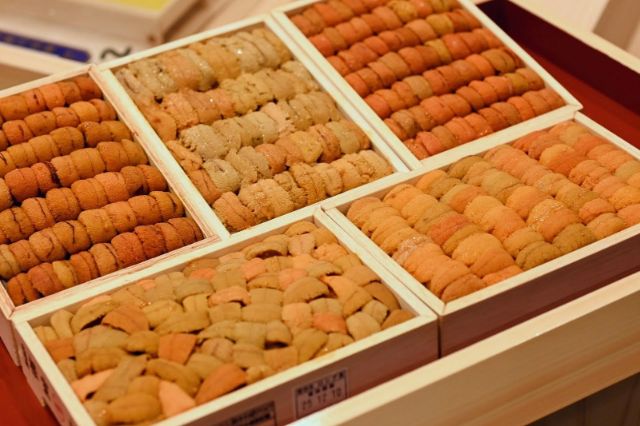
Rausu, in Hokkaido, is highly regarded for its uni due to the quality of seaweed in the area. Rausu kombu is considered some of the best in the world, so it follows suit that uni from the same place, which have fed on that seaweed, will be similarly delicious. The staff say, “Where you find good kombu, you’ll find good uni.”
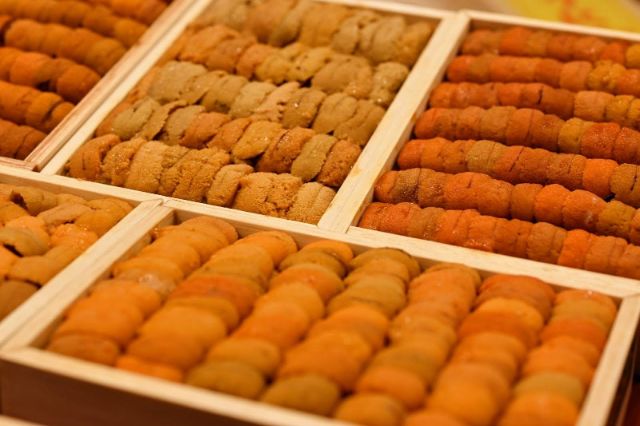
There’s even a helpful production map in the store, so staff can explain where the uni comes from while you eat it. Unitora takes its products so seriously, they even have special tasting parties in a secret room so that its staff can verify the quality.
Why is Uni So Expensive?
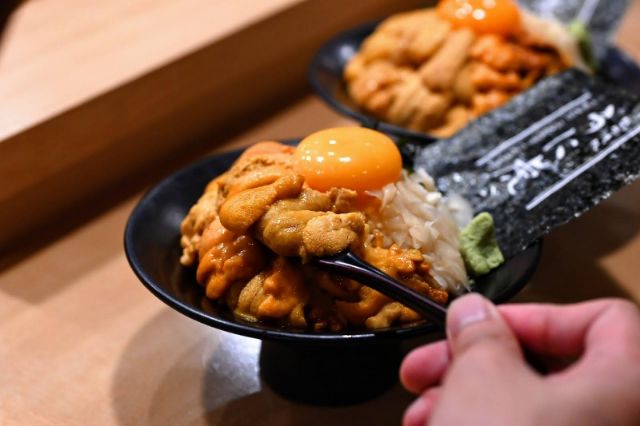
But as it became more popular, prices also rose to meet demand. Now, high quality uni is prized by Japanese diners and visitors alike.
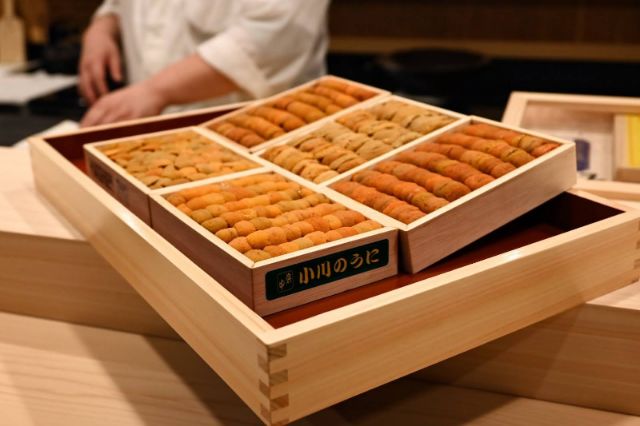
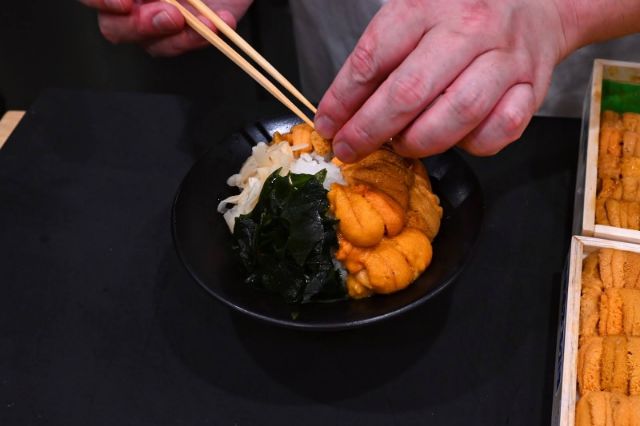
To enjoy the freshest uni available, special temperature control is needed and it’s best to eat it close to the source – such as having domestic uni from Hokkaido while you’re in Japan. In fact, even at their overseas locations, there’s not enough infrastructure to make the beautiful uni Unitora prides itself on, so they ship it from Japan.
MENU
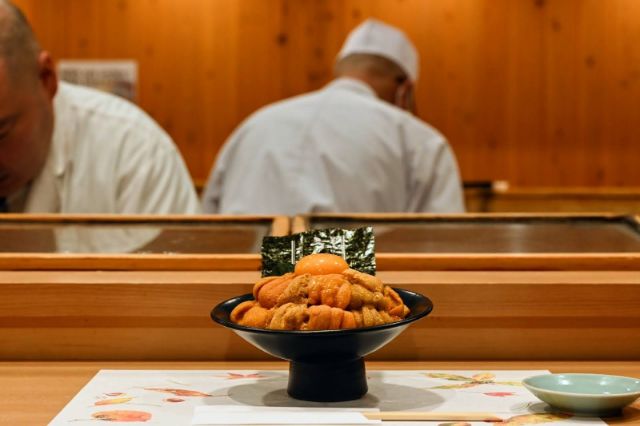
If you’re feeling really hungry (or hoping to eat something particularly luxurious) you can go absolutely crazy with the 24,500 JPY Emperor Bowl, which includes diners’ most favored ingredients – bluefin tuna and ikura – plus a staggering 6 varieties of uni and plenty of seaweed for making your own handrolls. It’s definitely a bowl fit for a king. Other bowls focus on tuna or salmon, and the 8,800 JPY Uogashi Bowl has a selection of many different toppings, just like a usual kaisendon but with a premium feeling
Where to go for Uni in Tokyo
Unitora Honten
Closed: None
Average price: [Dinner] 10,000 JPY
Access: Get off at Tsukiji Station on the Tokyo Metro Hibiya Line or Tsukijishijo Station on the Toei Oedo Line.
Address: 1F, mihiro Bldg., 4-10-5, Tsukiji, Chuo-ku, Tokyo Map
More Details Reservation
Craving Sushi Next? Visit Our Sister Restaurant!
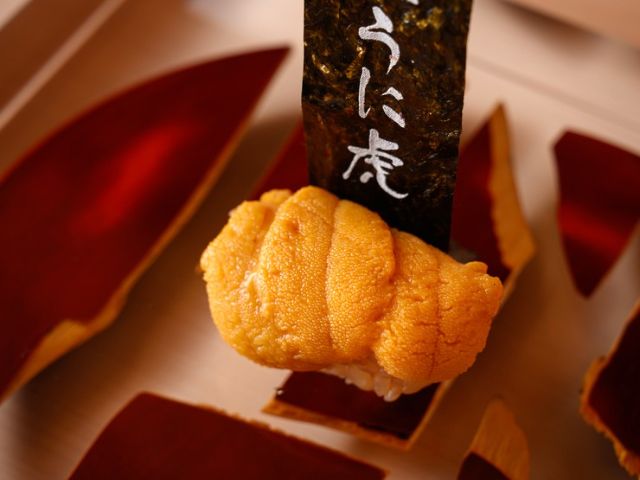
Sushi Unitora
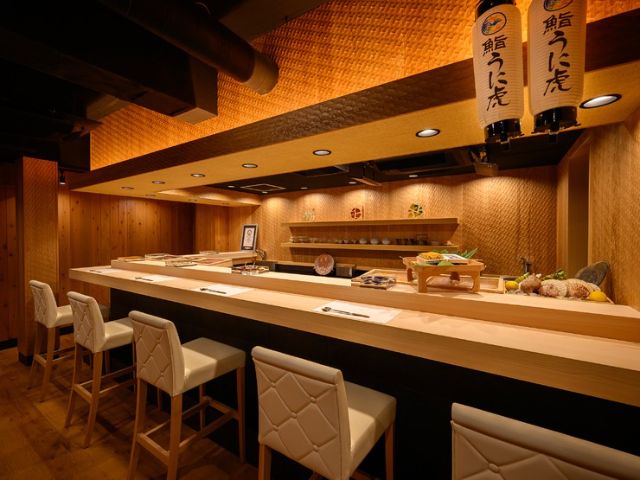
Sushi Unitora
Closed: Irregular holidays
Average price: [Dinner] 50,000 JPY
Access: From Tsukiji Station Exit 1, go straight along Shin-Ohashi Street, turn left at the Tsukiji 4-chome intersection, then turn right at the first street on Nakadori Street, and it will be on your left.
Address: MIHIRO Building 1F, 4-10-5 Tsukiji, Chuo-ku, Tokyo Map
Disclaimer: All information is accurate at time of publication.
Thank you for reading our article.
Our goal is to take your culinary journey to the next level by helping you find the best restaurant. With SAVOR JAPAN, you can search and make reservations for
the Sushi, Sashimi/ Seafood and Kaisendon (seafood bowl) restaurants found in and around Tsukiji that fill your needs.
Discover more Sushi, Sashimi/ Seafood and Kaisendon (seafood bowl) restaurants by area
- Tokyo Area
- Near Tokyo
- Kyoto and Osaka Area
- Hokkaido Area
- Northern Honshu (Tohoku)
- Central Honshu (Chubu)
- Western Honshu (Chugoku)
- Shikoku
- Kyushu
- Okinawa and Ryukyu Islands
Discover more restaurants to eat Japanese Cuisine, Japanese Cuisine and Japanese Cuisine by area
Keywords
Related Articles
-
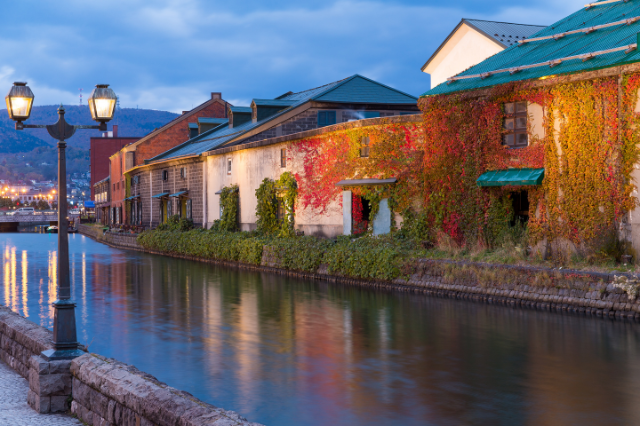
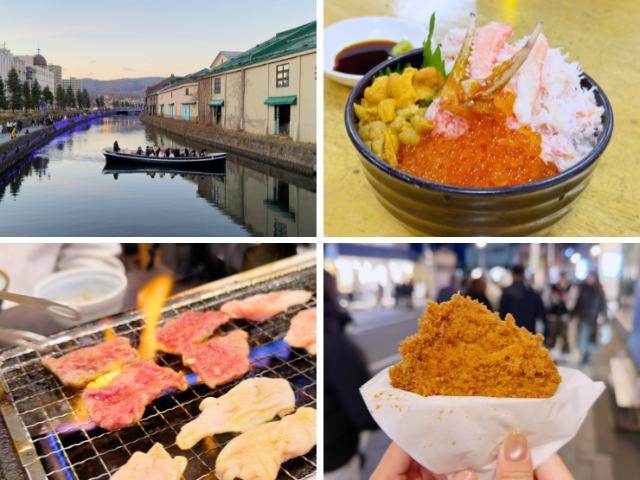
Top 5 Restaurants to Enjoy Hokkaido Cuisine in the Popular Tourist Area of Otaru
Otaru, lined with canals and brick-built warehouses, exudes a retro charm and stands as one of Hokkaido's premier tourist destinations. Its quaint streetscape captivates many visitors. A must-not-forget experience in Otaru is indulging in Hokkaido's culinary delights, starting with the bounty of the northern seas. Enjoy local ingredients and regional dishes to create memorable moments of your journey.
-
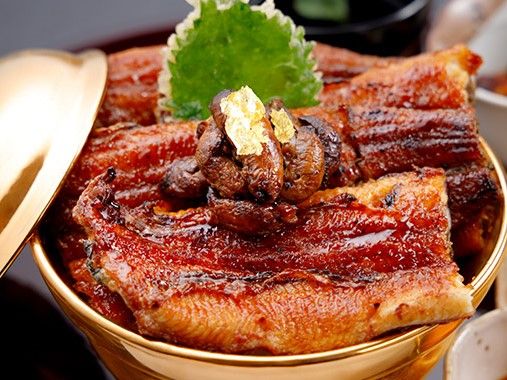
11 Selected Restaurants in Tokyo Where One Can Enjoy Delicious 'Donburi'
A 'donburi' is a popular Japanese dish consisting of rice topped with ingredients such as meat, fish, or eggs. In Tokyo, one can find a variety of donburi including katsudon, oyakodon, seafood don, and tendon, each restaurant offering its unique flavors. It is recommended as a dish that can be easily enjoyed during one's travels.
-
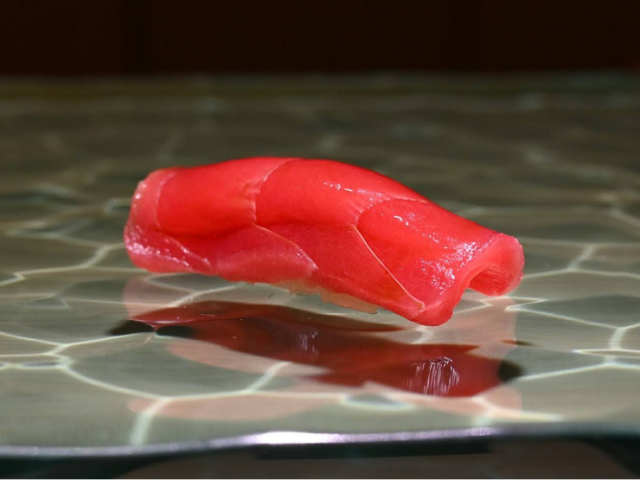
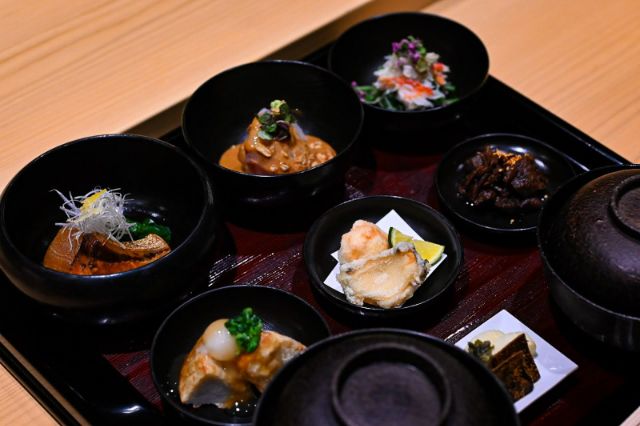
THE SAKAI Tokyo Kyobashi: Art-Infused Omakase Sushi Experience
Experience sushi mastery born in Frankfurt Germany and reinvisioned at its roots. THE SAKAI Tokyo, part of Chef Hiro Sakai’s MICHELIN award winning brand, is the newest addition to its legacy of international sushi culture. Visit in Kyobashi for a full culinary experience made with respect for international guests and local authenticity.
-
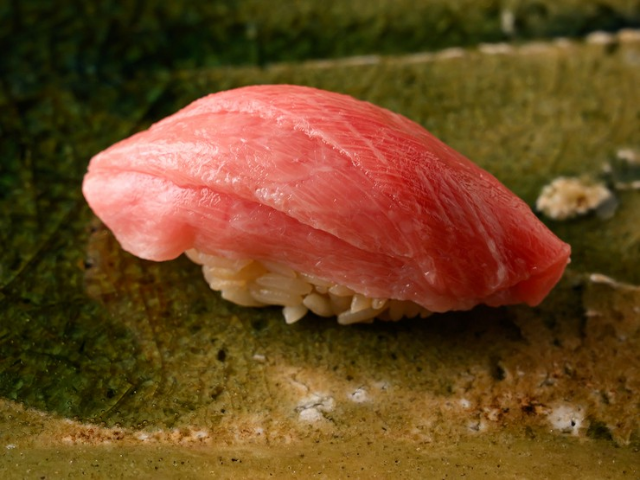
Azabudai Yuuri, a Bold New Sushi Omakase Near Tokyo Tower
When restaurants make the decision to appeal to international visitors, they often choose one of two routes: focus on cuisine that global guests will recognize, or hope they’ll learn to tread water with an immersion in Japanese tradition. At his new sushi restaurant near Azabudai Hills and Tokyo Tower, head chef Takahashi Yuta uses his childhood abroad to forge a third route: livening up Edomae sushi with clear English and a big personality.
-
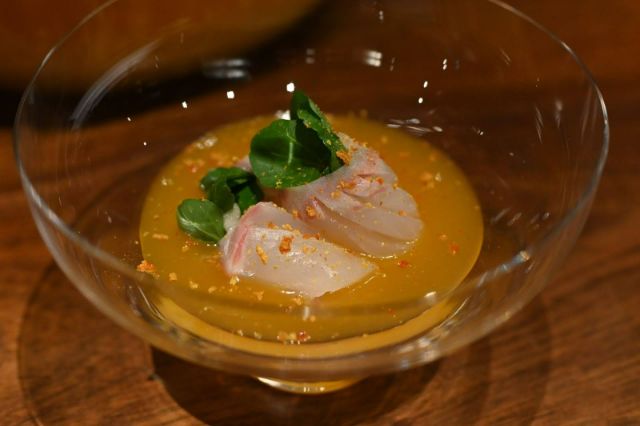
Where Kaiseki meets Fermentation: Experimental Washoku & Soba in Azabu-Juban at Hidden Gem Restaurant Honda
Honda Azabu-juban can be summed up in one word: eclectic. Its owner and mastermind, Chef Honda, is a sommelier, soba-artisan, and distinctly quirky guy wrapped in a cool chef package. For more than a decade, he has taken on independent challenges and devised menus that express his personality for guests’ enjoyment. In its current iteration, Chef Honda’s fermentation-forward course menu reinterprets Japanese food with creativity and confidence, blending classics with unexpected details that don’t fail to delight.
New Articles
-
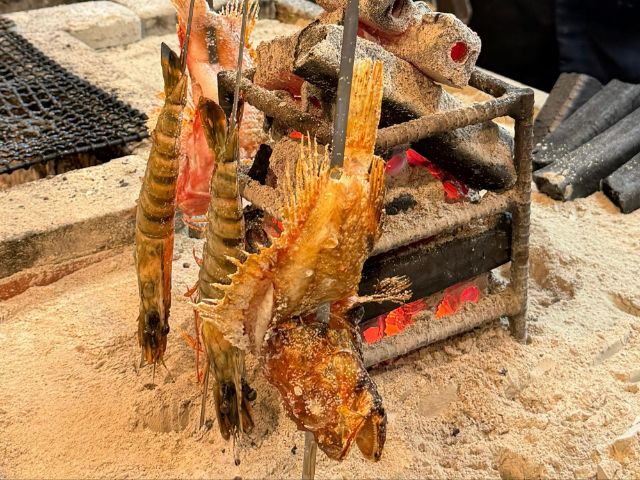
Beyond Sushi: Discover Robatayaki and Fresh Seafood in Nakano, Tokyo
-
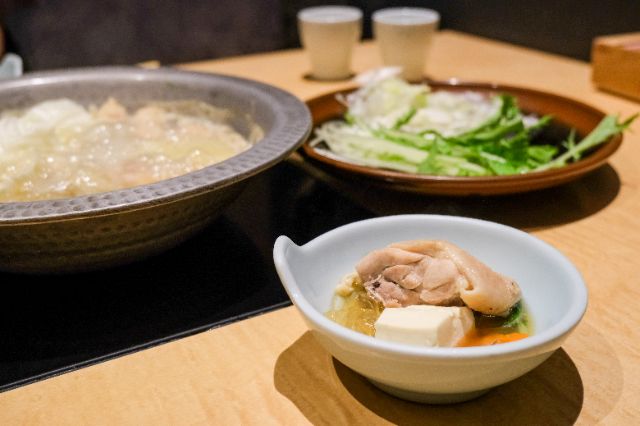
More Than Chicken Soup: Mizutaki at Hakata Hanamidori
-
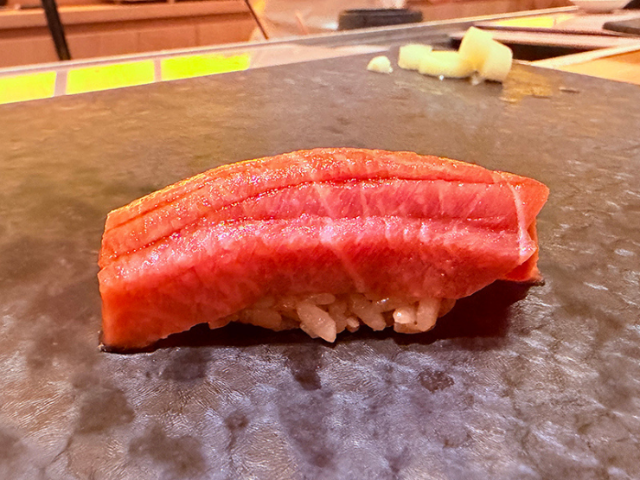
Fukuoka Gourmet: Tenjin Daimyo High-End Omakase Sushi Unboxing - Sushi Sho, Fukuoka Daimyo Garden City
-
All-You-Can-Eat Sushi & Snow Crab in Tokyo: Ultimate Seafood Experience at Fujiyama Akihabara
-
![[2026 Latest] Enjoy Halal Wagyu in Tokyo! Wagyu Ramen at "Shinjuku-tei", All-You-Can-Eat Sushi at "FUJIYAMA", and Yakiniku at "Gyumon" - Recommended Guide](https://rimage.savorjapan.com/svj/image/discover_oishii_japan/7283/article_head_150x105z.jpg?t=1789035665)
[2026 Latest] Enjoy Halal Wagyu in Tokyo! Wagyu Ramen at "Shinjuku-tei", All-You-Can-Eat Sushi at "FUJIYAMA", and Yakiniku at "Gyumon" - Recommended Guide
Categories
Cuisine
- Bars (24)
-
Japanese Cuisine (713)
- Kaiseki (51)
- Nabe (23)
- Okonomiyaki (25)
- Shabu Shabu (39)
- Soba (19)
- Sushi (151)
- Tempura (22)
- Teppanyaki (46)
- Shojin Ryori (4)
- Tonkatsu (16)
- Kushiyaki (10)
- Yakitori (46)
- Sukiyaki (36)
- Japanese Cuisine (344)
- Oyster (3)
- Sashimi/ Seafood (35)
- Unagi (eel) (39)
- Motsu Nabe (offal hotpot) (12)
- Mizutaki (chicken hot pot) (5)
- Oden (9)
- Kaisendon (seafood bowl) (12)
- Udon (3)
- Taverns(Izakaya) Cuisine (138)
- Western Cuisine (42)
- Italian/French Cuisine (98)
- Yakiniku/Steak (237)
- Chinese Cuisine (27)
- Ramen (Noodles) Cuisine (25)
- Cafe/Sweets (71)
- Other Asian Cuisine (5)
- Global/International Cuisine (7)
- Alcohol (59)
- Other (11)
Area
- Shikoku (10)
- Kyoto and Osaka (358)
-
Tokyo (496)
- Tokyo (310)
- Ginza (51)
- Roppongi (26)
- Shibuya (30)
- Shinjuku (51)
- Asakusa (21)
- Ebisu (15)
- Tsukiji (13)
- Tokyo Landmarks (5)
- Ueno (25)
- Akihabara (10)
- Ikebukuro (14)
- Jiyugaoka, Denenchofu, Nakameguro (9)
- Shimokitazawa (4)
- Kichijoji (3)
- Tachikawa (1)
- Omotesando, Harajuku, Aoyama (20)
- Akabane (1)
- Kagurazaka (4)
- Akasaka (9)
- Odaiba (2)
- Tsukishima, Harumi, Toyosu (3)
- Near Tokyo (107)
- Okinawa and Ryukyu Islands (59)
- Hokkaido (125)
- Northern Honshu (Tohoku) (31)
- Central Honshu (Chubu) (146)
- Western Honshu (Chugoku) (33)
- Kyushu (98)
Archives
- October 2026(4)
- September 2026(8)
- August 2026(6)
- July 2026(11)
- June 2026(10)
- May 2026(7)
- April 2026(18)
- March 2026(3)
- February 2026(13)
- January 2026(11)
- December 2025(9)
- November 2025(4)
- October 2025(3)
- September 2025(6)
- August 2025(11)
- July 2025(19)
- June 2025(18)
- May 2025(34)
- April 2025(43)
- March 2025(30)
- February 2025(36)
- January 2025(26)
- December 2024(69)
- November 2024(31)
- October 2024(15)
- September 2024(38)
- August 2024(65)
- July 2024(31)
- June 2024(54)
- May 2024(61)
- April 2024(28)
- March 2024(31)
- February 2024(42)
- January 2024(32)
- December 2023(20)
- November 2023(5)
- October 2023(10)
- September 2023(7)
- August 2023(18)
- July 2023(8)
- June 2023(8)
- May 2023(18)
- April 2023(15)
- March 2023(1)
- January 2023(1)
- April 2022(2)
- March 2022(2)
- February 2022(1)
- January 2022(1)
- July 2021(1)
- March 2021(1)
- February 2021(1)
- December 2020(1)
- October 2020(1)
- September 2020(2)
- August 2020(10)
- July 2020(6)
- June 2020(9)
- May 2020(11)
- April 2020(8)
- March 2020(8)
- February 2020(13)
- January 2020(9)
- December 2019(24)
- November 2019(8)
- August 2019(14)
- July 2019(15)
- June 2019(18)
- May 2019(17)
- April 2019(16)
- March 2019(22)
- February 2019(22)
- January 2019(26)
- December 2018(34)
- November 2018(40)
- October 2018(32)
- September 2018(11)
- August 2018(8)
- July 2018(6)
- June 2018(9)
- May 2018(10)
- April 2018(21)
- March 2018(74)
- February 2018(39)
- January 2018(26)
- December 2017(60)
Keywords
- Omakase
- Accessible
- Affordable
- All-You-Can-Eat
- Amazing Scenery
- anime
- Art
- Autumn
- Awards
- Beer Gardens
- Breakfast
- Chef Recommendations
- Cherry Blossoms
- Chinese
- Close To Station
- Condiments
- Counter
- Coupon
- Crab
- Culture
- Dassai
- Dates
- delivery
- Early Summer
- Editor's Recommendation
- English Available
- Event
- Expo
- Fall Leaves
- Family-Friendly
- Famous Restaurant
- Famous Tourist Spot
- Fast Food
- festival
- fireworks
- Flower Farm
- Free Wi-Fi
- French
- Great Location
- Guide
- Halal
- Hibachi
- hotpot
- How To
- hydrangea
- Hygiene
- Illumination
- Italian
- Izakaya
- Japanese
- Japanese alcohol
- jingisukan
- Kaiseki
- Kappo
- Kushiage
- Kushikatsu
- Kyoto
- Late-Night
- Lunch
- Manners
- matsusakagyu
- Michelin
- mizutaki
- Model Course
- monjayaki
- motsunabe
- Mt.Fuji
- Multilingual Menus
- Nabe
- Narita Airport
- New Year
- Ninja
- Noodle
- Oden
- Okonomiyaki
- omotenashi
- Onsen
- Osaka
- Osaka Station
- Photogenic Site
- pizza
- PR
- Private Room
- Ramen
- ranking
- Recipe
- Regional Cuisine
- Resort
- Rice Bowl Dish (Donburi)
- robata
- sacred places
- Sake
- Sakura
- Sashimi
- sea urchin
- Setouchi Area
- Shabu Shabu
- sightseeing
- Signature Dish
- Soba
- Solo Diners Welcomed
- Spicy Food
- Spring
- Steak
- Summer
- Sunflower
- Sushi
- takeout
- Teppanyaki
- Terrace Seating
- Tokyo
- Tokyo Experiences
- Tokyo Skytree
- Tokyo Tower
- unagi
- UNESCO
- Vegan
- Vegetarian
- Wagyu
- What Popular Gourmet Sites Recommend
- Whisky
- Wine Bar
- Winter
- Wisteria
- Workshop
- World Heritage Site
- World Writers
- Yakiniku
- Yoshoku
- Yuba
- Zen
Discover Restaurants By Area
-

Tokyo Area
Japan's largest city, Tokyo, is the center of culinary culture in Japan. Countless Tokyo restaurants serve every kind of food imaginable and the Toyosu fish market keeps restaurants stocked with the nation's finest fish.
-

Near Tokyo
Coastal areas, mountains and valleys surrounding Tokyo are bursting with tourist destinations, such as hot springs and ski slopes, where many unique foods are only available locally.
-

Kyoto and Osaka Area
The cities of Kyoto and Osaka, together with their surrounding areas, have greatly influenced Japan's culinary culture since the 7th Century. The region is renowned for its entertainment, Kobe beef, and wide-ranging traditional dishes.
-

Hokkaido Area
The island of Hokkaido is home to wide-ranging produce of the finest quality, such as rice, meat, vegetables, fish and fruit. Popular dishes from Hokkaido include robatayaki (food slowly roasted on skewers) and Sapporo miso ramen.
-

Northern Honshu (Tohoku)
The northern end of Japan's main island, Honshu, is renowned for its seasonal fruit and vegetables, nation-leading harvest of fish (especially tuna from Ohma), and delicious beef from Yonezawa, Sendai and Yamagata.
-

Central Honshu (Chubu)
Chubu is in the center of Japan's main island, Honshu, and its culinary culture reflects its position between Japan's western and eastern halves. Delicious Hida beef, world-famous Mount Fuji and many acclaimed sake breweries are in Chubu.
-

Western Honshu (Chugoku)
Chugoku, on the southwest of Japan's main island, is rich with diverse produce. Many of its products are praised as Japan's best, including Matsuba crabs from Tottori and oysters from Hiroshima. Its pears and muscats are also top grade.
-

Shikoku
The mild climate of Shikoku is ideal for growing citrus fruit such as sudachi. Shikoku is also famous for Sanuki udon noodles, huge yields of tiger prawn from Ehime Prefecture and the best torafugu (tiger globefish) in the country.
-

Kyushu
Western culture was first introduced to Japan through Kyushu, Japan's third largest island, where the influence of Portuguese and other western cuisine influenced the creation of a colorful culinary tradition.
-

Okinawa and Ryukyu Islands
Okinawa, Japan’s southernmost prefecture, is a treasure trove of distinctive dishes and drinks that have become popular throughout Japan, including Okinawa soba, unique sushi toppings and Awamori distilled liquor.