THE SAKAI Tokyo Kyobashi: Art-Infused Omakase Sushi Experience
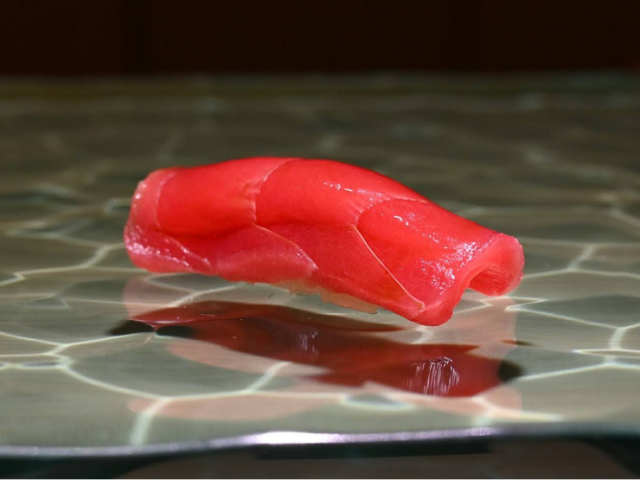

THE SAKAI Tokyo
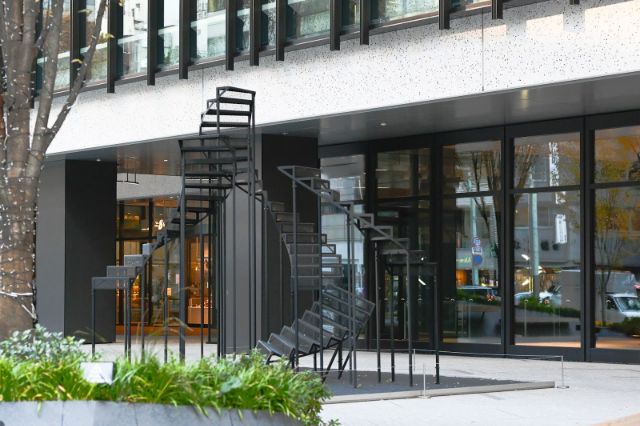
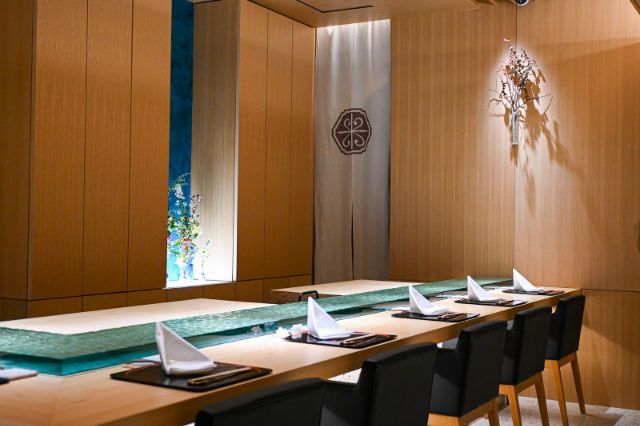
The Toda building is a mixed use complex, including dining and office spaces, but its most notable features are the art centers connected to the building. A respect for contemporary and classical art is present throughout the space, and even finds its way into the interior design of THE SAKAI Tokyo. Needless to say, this doesn’t look anything like your run of the mill Tokyo sushi counter.
THE SAKAI Tokyo
Closed: Sunday, Monday / New Year's holidays from December 25th to January 5th
Average price: [Dinner] 22,000 JPY / [Lunch] 13,200 JPY
Access: 1-minute walk from Exit 24 of Tokyo Station's Yaesu Exit
Address: 2F, TODA BUILDING, 1-7-1, Kyobashi, Chuo-ku, Tokyo Map
More Details Reservation
Signature Dish
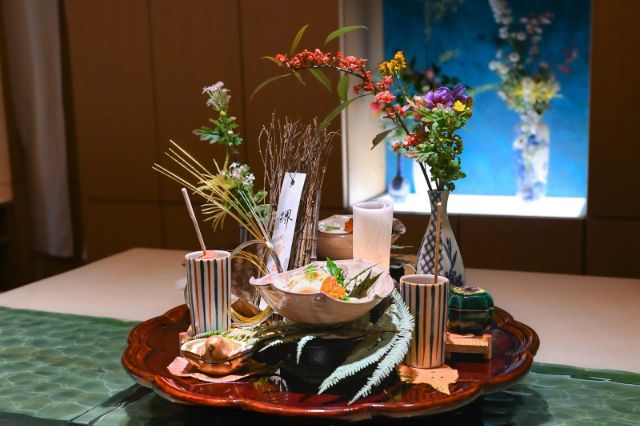
THE SAKAI Tokyo is first and foremost a sushi restaurant, but actually its signature dish isn’t a particular piece of nigiri or some luxurious uni handroll. It’s hassun. Diners familiar with kaiseki, the multi-course, formal dining tradition enjoyed at high end Japanese restaurants and ryotei/ryokan, will recognize hassun as a plate of small bites that evoke the season.
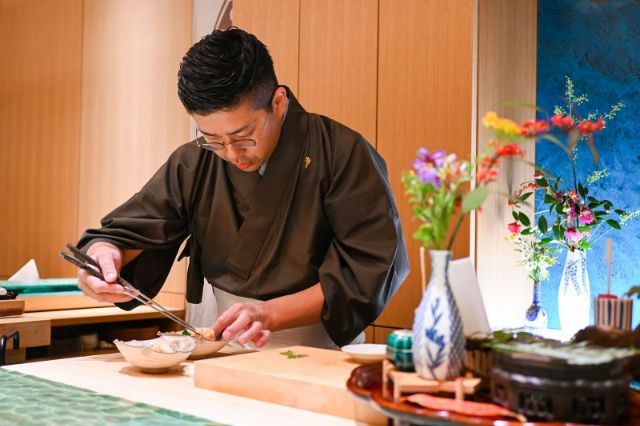
At THE SAKAI Tokyo, bespectacled head chef Yuta Matsuoka carefully selects several vessels from his private collection of antiques, arranging them with seasonal foliage and a short message card written in Japanese. Although most of his international guests might not be familiar with the finer points of the experience, his attention to detail enrichens every bite.
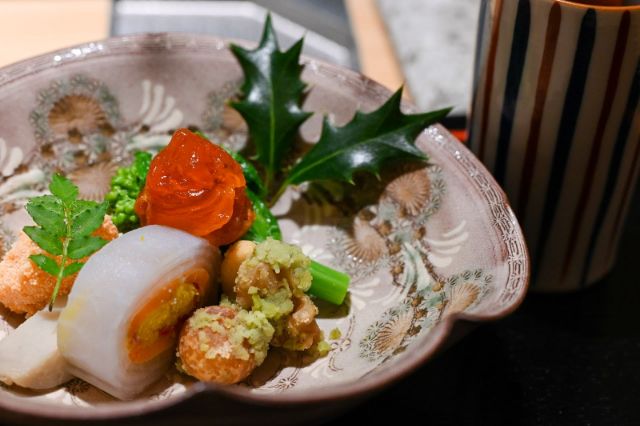
During our visit, a mixture of winter colors and autumn leaves marks the transition to colder months. Warming oden is served in a tall cup, vegetables are marinated Japanese-style, and gummy, sweet persimmon, not quite dried but not fresh and crisp either, evokes the time of year.
Sushi
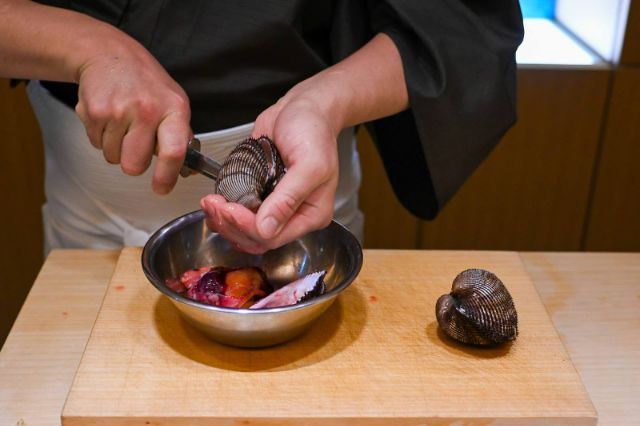
The fish and seafood are prepared in-store, just before diners arrive. On this occasion, fresh akagai, aptly called blood clam in English for their crimson juices, are shucked and prepared a la minute. Rested fish are sliced right in front of us. Down to the wasabi, each ingredient is shelled, cut and grated at peak freshness.
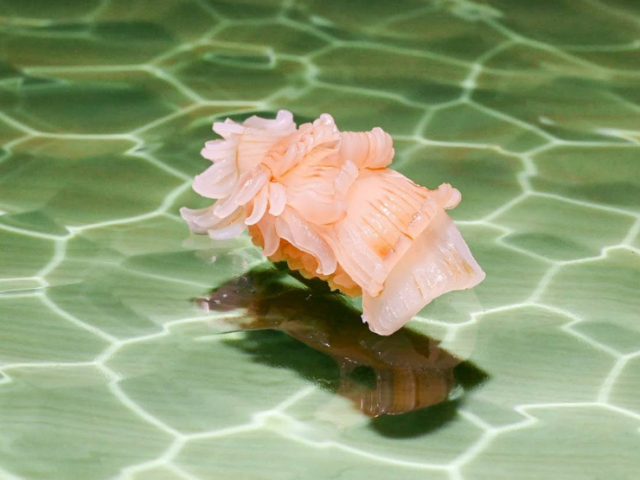
Moving on from starters to sushi, seasoned diners will notice that while many of the neta (sushi toppings) are classical, there are a few unique treatments that distinguish THE SAKAI Tokyo from ordinary Tokyo sushi. For one, the squid, done with fine knife technique to enhance its appearance and mouthfeel, can be served one of two ways, at the discretion of the diner: brushed with soy sauce, or sprinkled with salt and citrus.
According to chef Matsuoka, the salt and citrus version is actually more traditional, but international guests tend to opt for soy sauce. He says, however, that he’s a soy sauce lover himself and personally prefers the non-traditional option.
THE SAKAI Tokyo
Closed: Sunday, Monday / New Year's holidays from December 25th to January 5th
Average price: [Dinner] 22,000 JPY / [Lunch] 13,200 JPY
Access: 1-minute walk from Exit 24 of Tokyo Station's Yaesu Exit
Address: 2F, TODA BUILDING, 1-7-1, Kyobashi, Chuo-ku, Tokyo Map
More Details Reservation
Food for an international audience
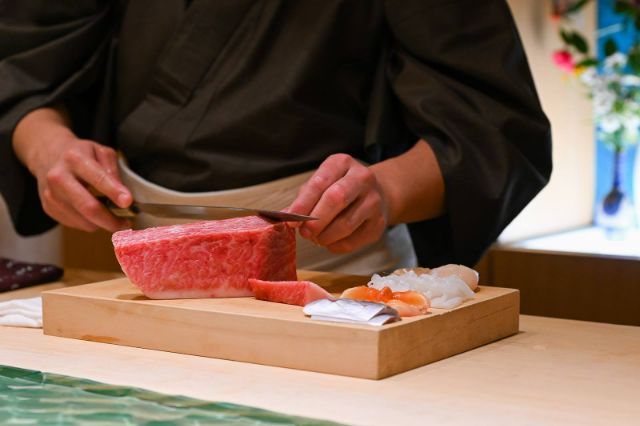
Another interesting inclusion is the option for guests to enjoy salmon nigiri, which is almost never offered at traditional Edo-mae sushi counters. While salmon sushi has become popular overseas and is especially beloved as a kaitenzushi (rotating sushi bar) and supermarket fish, it’s rarely, if ever, served in fine sushi establishments in Japan.
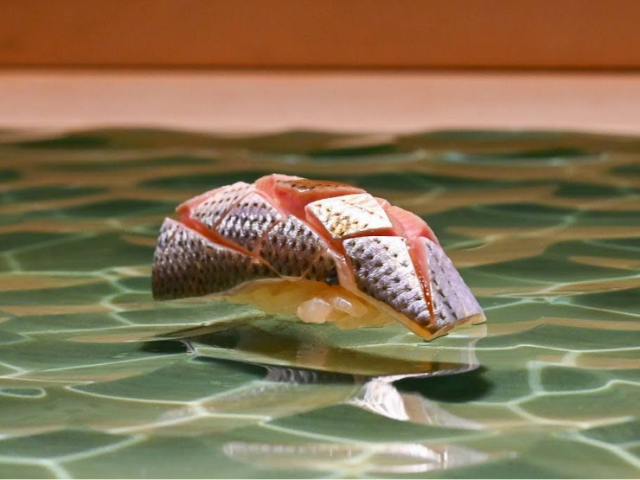
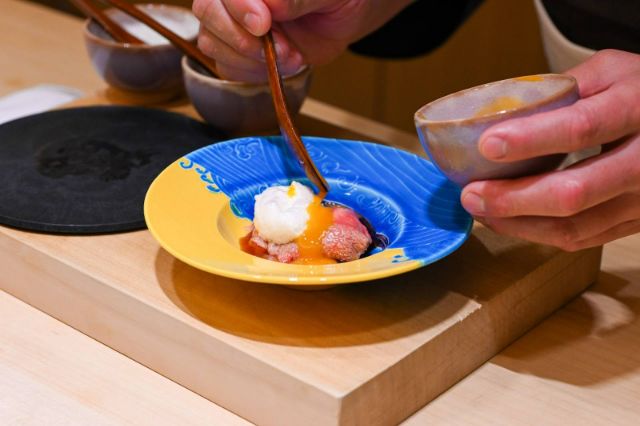
Those with less experience will appreciate the familiar savory glaze of teriyaki chicken served abroad. It’s a satisfying dish that takes inspiration from home and abroad for a flavor that satisfies a large range of guests.
The Meal
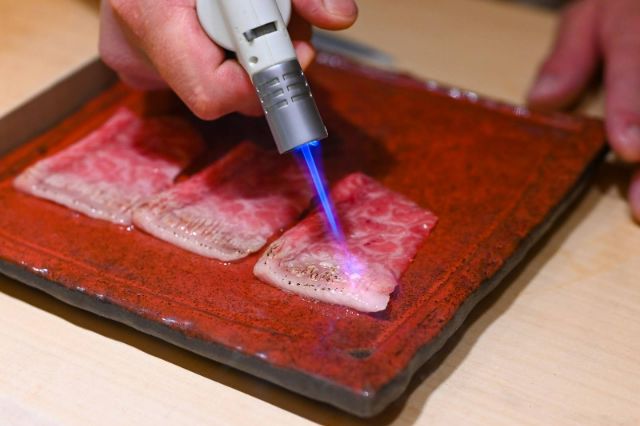
THE SAKAI Tokyo is a sushi restaurant, but also serves appetizers, soups, and meat dishes as part of the course. Diners will appreciate the selection of alcoholic beverages, which ranges from wine to sake and simple cocktails. As a global brand, not only Japanese sensibilities, but also international preferences are taken into account.
Dessert
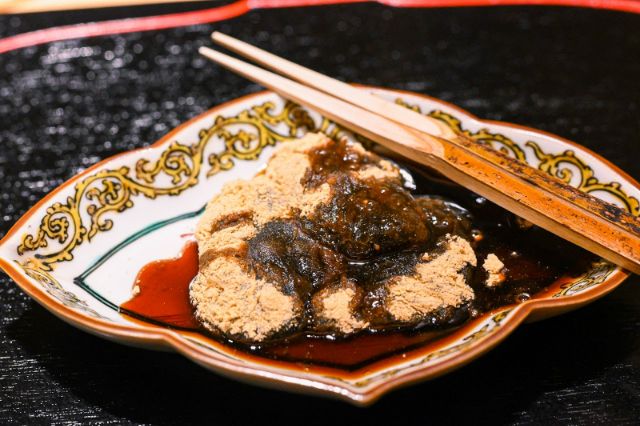
Dessert can easily become an afterthought in Japanese meals, sometimes simply an expression of seasonal fruit or a cleansing jelly. At THE SAKAI Tokyo, it’s a performance. The chef prepares boiling water and dried warabi powder made from real, natural warabi plants and mixes them vigorously over a burner until the slurry thickens into warm, gooey warabi mochi.
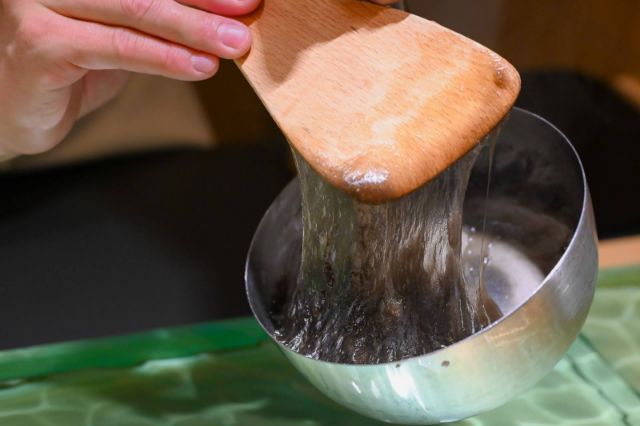
While warabi mochi is usually bought and enjoyed chilled or at room temperature, fresh warabi is equal parts rare and delicious. Coated in kinako soybean flour and black sugar syrup, these sticky, stretchy dumplings might become your new favorite Japanese treat.
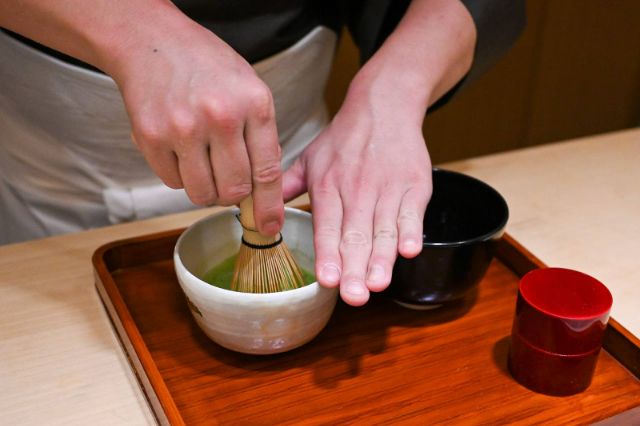
In response to the recent matcha boom and increasing interest in tea ceremony, the chef will also prepare matcha for guests using traditional tools and techniques. In line with his other passions, chef Matsuoka is a practiced tea master. A meal at THE SAKAI Tokyo allows diners to experience many essential aspects of traditional Japanese food culture in one space. Both deeper elements, such as the introduction of hassun, and comforting, familiar flavors balance each bite for an unforgettable meal.
The Chef
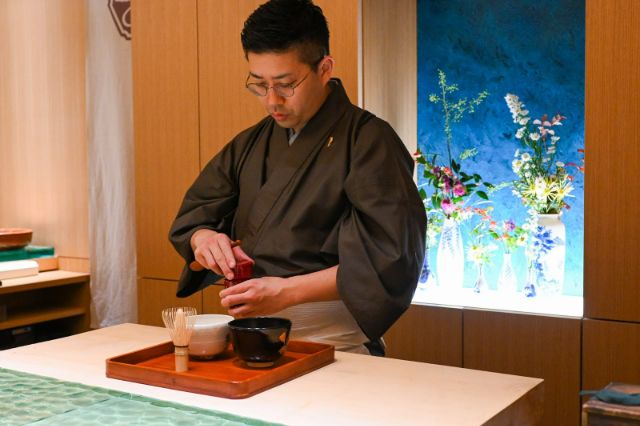
Chef Yuta Matsuoka isn’t just a sushi chef – he actually also excels in kaiseki and tea ceremony and is a personal collector of fine serving ware. His antique collection finds a new home at THE SAKAI Tokyo, where guests get to enjoy their meal on plates from a hundred years ago or even older. As a kaiseki chef, he also operates an establishment in Saitama, the prefecture Northwest of Tokyo.
By relying on chef Matsuoka’s unique background, THE SAKAI Tokyo in Kyobashi developed its own style. The restaurant developed a unique menu that celebrates the seasons through small plates as well as sushi. The chef’s passion is evident in his hassun, making it a notable signature for a sushi restaurant. Ikebana flower arrangements and seasonal scripts further emphasize the relationship between art, ceremony and dining that creates an immersive sensory experience.
THE SAKAI Tokyo Brand
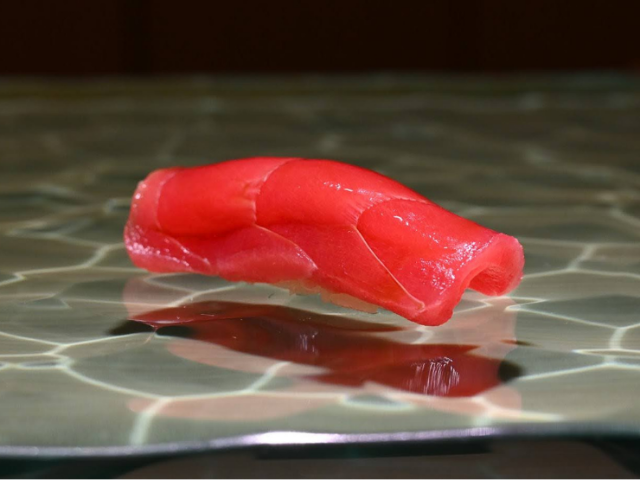
THE SAKAI Tokyo was born in Frankfurt Germany, after head chef Hiro Sakai’s relocation. The German store has been listed in The MICHELIN Guide and offers modern sushi Omakase tailored for international palates. Chef Sakai mentions that he was deeply impressed by European conscientiousness around health and the environment.
He was inspired to infuse THE SAKAI Tokyo brand with sustainable ingredients and healthful cooking techniques that honor Japanese tradition while keeping up with global ideas. At the Tokyo locations, diners enjoy this relationship in a different way, calling back to Chef Sakai’s 30 years as a Japanese sushi chef.
Visit THE SAKAI Tokyo
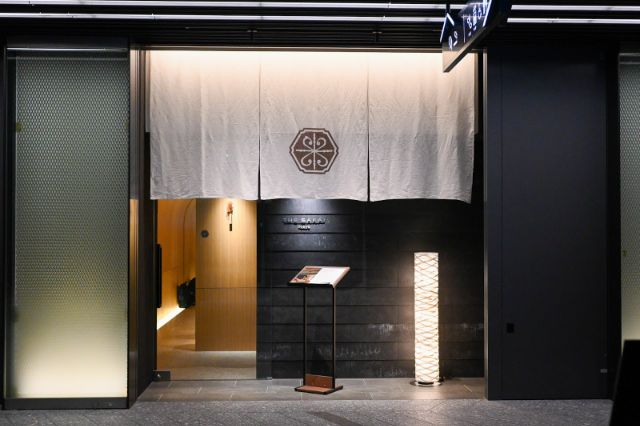
The newly opened SAKAI Tokyo branch invites guests to appreciate classic edomae sushi in an artful space. From the warm wood walls, to the plush seats and one of a kind “floating” counter, diners will find moments of delight as soon as they walk in the door. The chef’s passion not only for sushi, but for the fine details of Japanese cuisine such as servingware and seasonality creates an unforgettable experience.
THE SAKAI Tokyo
Closed: Sunday, Monday / New Year's holidays from December 25th to January 5th
Average price: [Dinner] 22,000 JPY / [Lunch] 13,200 JPY
Access: 1-minute walk from Exit 24 of Tokyo Station's Yaesu Exit
Address: 2F, TODA BUILDING, 1-7-1, Kyobashi, Chuo-ku, Tokyo Map
More Details Reservation
Disclaimer: All information is accurate at time of publication.
Thank you for reading our article.
Our goal is to take your culinary journey to the next level by helping you find the best restaurant. With SAVOR JAPAN, you can search and make reservations for
the Sushi, Sweets, Japanese Cuisine and Sashimi/ Seafood restaurants found in and around Tokyo that fill your needs.
Discover more Sushi, Sweets, Japanese Cuisine and Sashimi/ Seafood restaurants by area
- Tokyo Area
- Near Tokyo
- Kyoto and Osaka Area
- Hokkaido Area
- Northern Honshu (Tohoku)
- Central Honshu (Chubu)
- Western Honshu (Chugoku)
- Shikoku
- Kyushu
- Okinawa and Ryukyu Islands
Discover more restaurants to eat Japanese Cuisine, Cafe/Sweets, Japanese Cuisine and Japanese Cuisine by area
Keywords
Related Articles
-
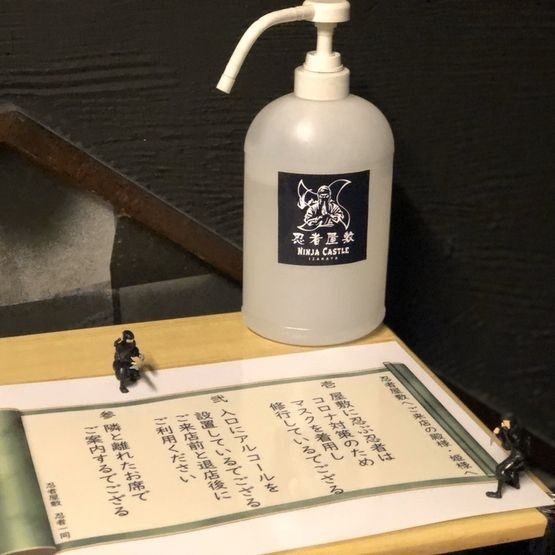
5 Restaurants in Tokyo with Extra Hygiene Measures to Fight Coronavirus
Is it safe now to eat out in Tokyo? Is it not? It is still in the gray area. But if you need some time to refresh your mind and belly, it might be the time to go out and eat, as long as you follow the safety protocol. It is now more important than ever to carefully choose where to eat. Many restaurants are taking extra steps to prevent the spread of coronavirus. How does the new normal in Japan look like for restaurants?
-
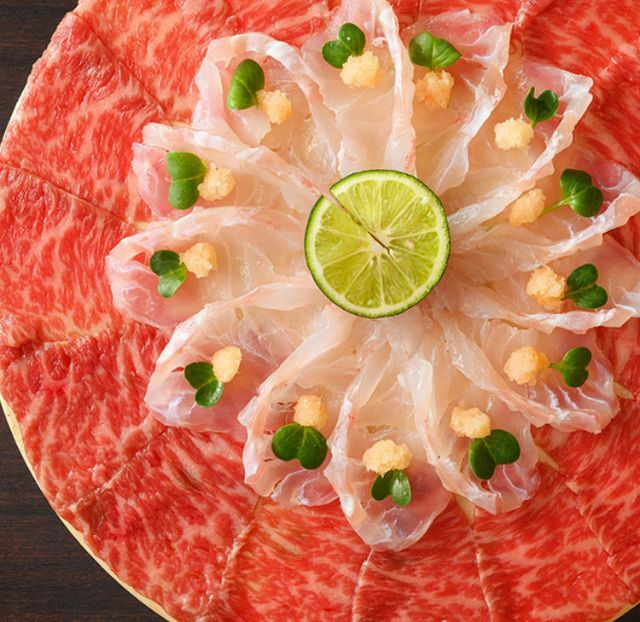
Authentic Beef Sushi Kaiseki that Combines Seasonal Seafood and Japanese Beef | Beef Sushi Kintan (Ginza)
Located a mere 6-minute walk from Ginza Station, Beef Sushi Kintan boasts an excellent location. Upon passing through the white noren curtain, you'll find yourself in a unique Ginza establishment with a counter made of Kiso cypress and a high-quality space adorned with white wood and gold. What you can savor here is the unparalleled and innovative "beef sushi," unlike anything else in the world. Whether it's for a date, a business meal, or entertaining guests, you can enjoy it in various scenes.
-
Tokyo October: Japanese Dining with Art & Vegan Shojin Ryori Omakase in Omotesando
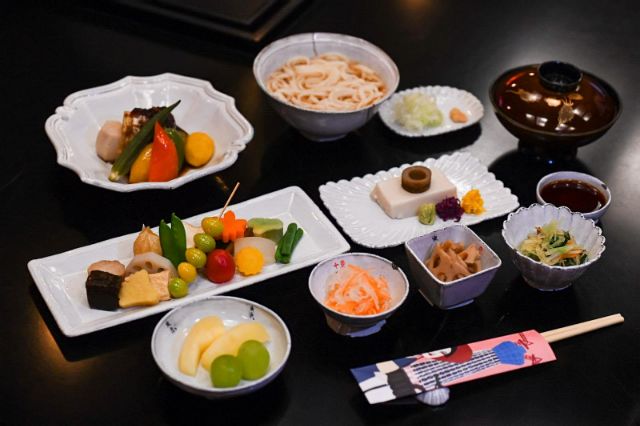
Tokyo October serves classical washoku, including vegan shojin ryori and kaiseki in a space that looks like a temple directed by French artistes. The art and architecture comes from renowned design houses, while the food is created by a chef with a deep passion for and study of washoku. He’s followed the traditional cuisine of Japan down to its roots for over thirty years, specializing in Japanese tea ceremony and gastronomy.
-
This Tokyo Omakase Takes Requests: Shimbashi Ren
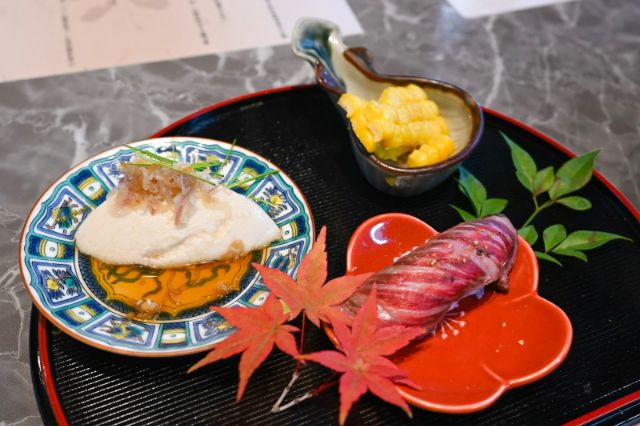
What do you get when you cross a globe-trotting Japanese chef with one of Tokyo’s last bubble-era drinking neighborhoods? An unforgettable omakase where it’s not all left up to the chef. Once a late-night hangout for local office workers, Shimbashi Ren metamorphosed into a space where visitors from around the world enjoy a course menu that is at once exactly what they expect, and full of surprises.
-
Azabudai Yuuri, a Bold New Sushi Omakase Near Tokyo Tower
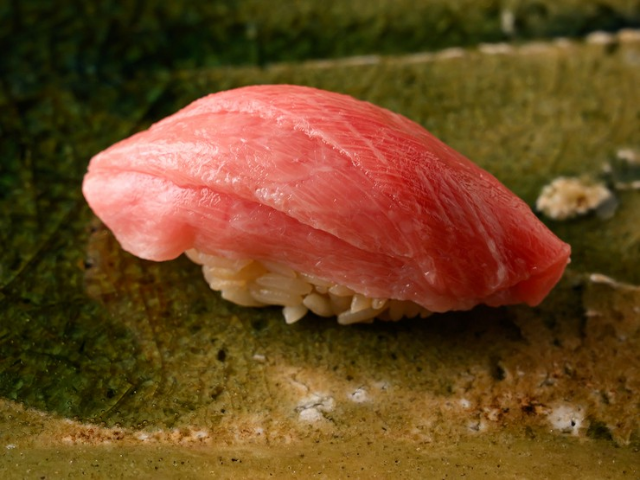
When restaurants make the decision to appeal to international visitors, they often choose one of two routes: focus on cuisine that global guests will recognize, or hope they’ll learn to tread water with an immersion in Japanese tradition. At his new sushi restaurant near Azabudai Hills and Tokyo Tower, head chef Takahashi Yuta uses his childhood abroad to forge a third route: livening up Edomae sushi with clear English and a big personality.

New Articles
-
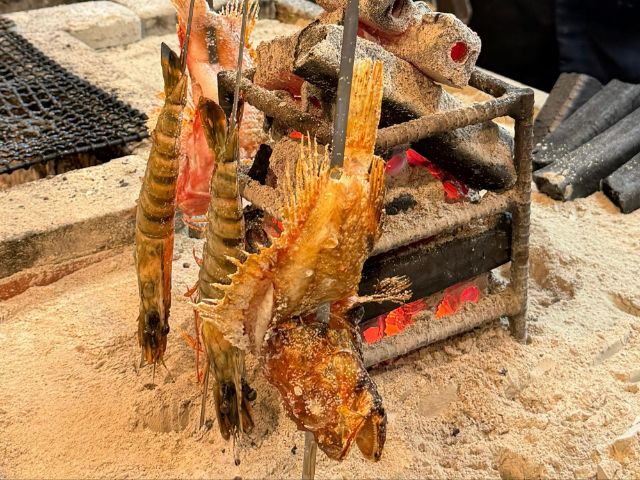
Beyond Sushi: Discover Robatayaki and Fresh Seafood in Nakano, Tokyo
-
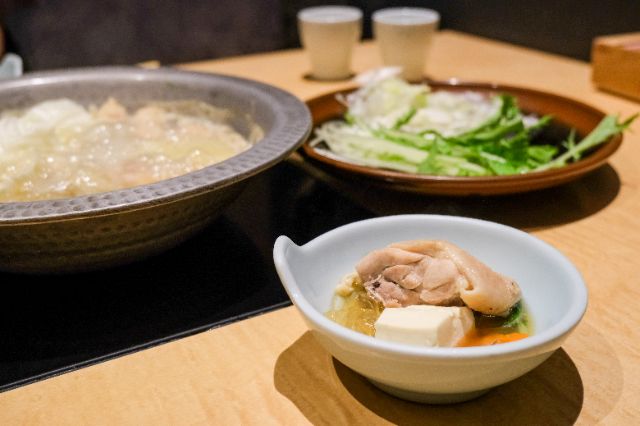
More Than Chicken Soup: Mizutaki at Hakata Hanamidori
-
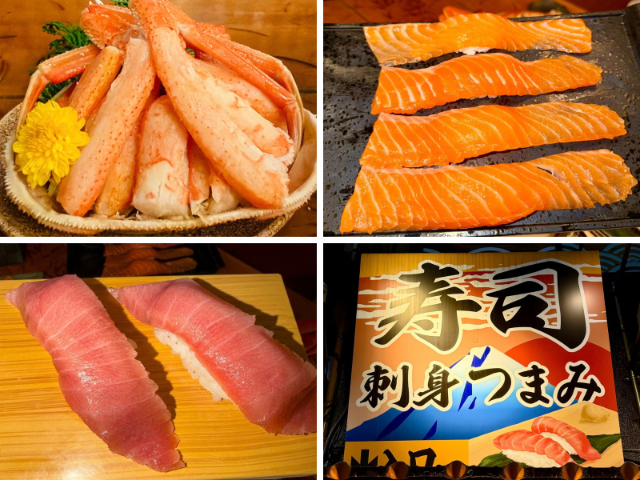
All-You-Can-Eat Sushi & Snow Crab in Tokyo: Ultimate Seafood Experience at Fujiyama Akihabara
-
![[2026 Latest] Enjoy Halal Wagyu in Tokyo! Wagyu Ramen at "Shinjuku-tei", All-You-Can-Eat Sushi at "FUJIYAMA", and Yakiniku at "Gyumon" - Recommended Guide](https://rimage.savorjapan.com/svj/image/discover_oishii_japan/7283/article_head_150x105z.jpg?t=1789035665)
[2026 Latest] Enjoy Halal Wagyu in Tokyo! Wagyu Ramen at "Shinjuku-tei", All-You-Can-Eat Sushi at "FUJIYAMA", and Yakiniku at "Gyumon" - Recommended Guide
-
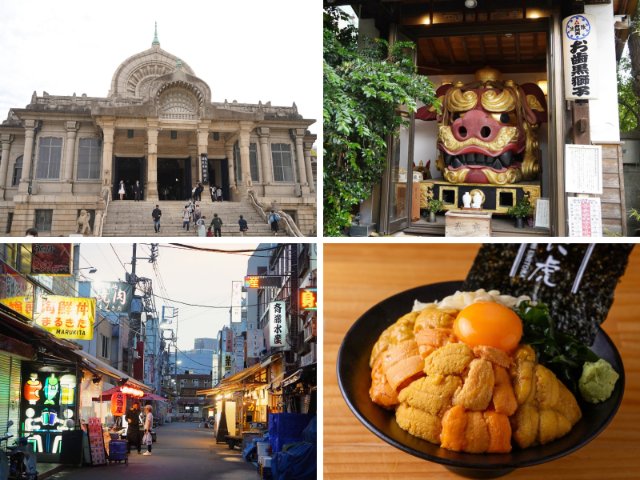
Tsukiji Market Half-Day Walking Guide | 5 Must-Visit Attractions + Most Efficient Route (Including Transportation and Business Hours Summary)
Categories
Cuisine
- Bars (24)
-
Japanese Cuisine (713)
- Kaiseki (51)
- Nabe (23)
- Okonomiyaki (25)
- Shabu Shabu (39)
- Soba (19)
- Sushi (151)
- Tempura (22)
- Teppanyaki (46)
- Shojin Ryori (4)
- Tonkatsu (16)
- Kushiyaki (10)
- Yakitori (46)
- Sukiyaki (36)
- Japanese Cuisine (344)
- Oyster (3)
- Sashimi/ Seafood (35)
- Unagi (eel) (39)
- Motsu Nabe (offal hotpot) (12)
- Mizutaki (chicken hot pot) (5)
- Oden (9)
- Kaisendon (seafood bowl) (12)
- Udon (3)
- Taverns(Izakaya) Cuisine (138)
- Western Cuisine (42)
- Italian/French Cuisine (98)
- Yakiniku/Steak (237)
- Chinese Cuisine (27)
- Ramen (Noodles) Cuisine (25)
- Cafe/Sweets (71)
- Other Asian Cuisine (5)
- Global/International Cuisine (7)
- Alcohol (59)
- Other (11)
Area
- Shikoku (10)
- Kyoto and Osaka (358)
-
Tokyo (496)
- Tokyo (310)
- Ginza (51)
- Roppongi (26)
- Shibuya (30)
- Shinjuku (51)
- Asakusa (21)
- Ebisu (15)
- Tsukiji (13)
- Tokyo Landmarks (5)
- Ueno (25)
- Akihabara (10)
- Ikebukuro (14)
- Jiyugaoka, Denenchofu, Nakameguro (9)
- Shimokitazawa (4)
- Kichijoji (3)
- Tachikawa (1)
- Omotesando, Harajuku, Aoyama (20)
- Akabane (1)
- Kagurazaka (4)
- Akasaka (9)
- Odaiba (2)
- Tsukishima, Harumi, Toyosu (3)
- Near Tokyo (107)
- Okinawa and Ryukyu Islands (59)
- Hokkaido (125)
- Northern Honshu (Tohoku) (31)
- Central Honshu (Chubu) (146)
- Western Honshu (Chugoku) (33)
- Kyushu (98)
Archives
- October 2026(3)
- September 2026(8)
- August 2026(6)
- July 2026(11)
- June 2026(10)
- May 2026(7)
- April 2026(18)
- March 2026(3)
- February 2026(13)
- January 2026(11)
- December 2025(9)
- November 2025(4)
- October 2025(3)
- September 2025(6)
- August 2025(11)
- July 2025(19)
- June 2025(18)
- May 2025(34)
- April 2025(43)
- March 2025(30)
- February 2025(36)
- January 2025(26)
- December 2024(69)
- November 2024(31)
- October 2024(15)
- September 2024(38)
- August 2024(65)
- July 2024(31)
- June 2024(54)
- May 2024(61)
- April 2024(28)
- March 2024(31)
- February 2024(42)
- January 2024(32)
- December 2023(20)
- November 2023(5)
- October 2023(10)
- September 2023(7)
- August 2023(18)
- July 2023(8)
- June 2023(8)
- May 2023(18)
- April 2023(15)
- March 2023(1)
- January 2023(1)
- April 2022(2)
- March 2022(2)
- February 2022(1)
- January 2022(1)
- July 2021(1)
- March 2021(1)
- February 2021(1)
- December 2020(1)
- October 2020(1)
- September 2020(2)
- August 2020(10)
- July 2020(6)
- June 2020(9)
- May 2020(11)
- April 2020(8)
- March 2020(8)
- February 2020(13)
- January 2020(9)
- December 2019(24)
- November 2019(8)
- August 2019(14)
- July 2019(15)
- June 2019(18)
- May 2019(17)
- April 2019(16)
- March 2019(22)
- February 2019(22)
- January 2019(26)
- December 2018(34)
- November 2018(40)
- October 2018(32)
- September 2018(11)
- August 2018(8)
- July 2018(6)
- June 2018(9)
- May 2018(10)
- April 2018(21)
- March 2018(74)
- February 2018(39)
- January 2018(26)
- December 2017(60)
Keywords
- Omakase
- Accessible
- Affordable
- All-You-Can-Eat
- Amazing Scenery
- anime
- Art
- Autumn
- Awards
- Beer Gardens
- Breakfast
- Chef Recommendations
- Cherry Blossoms
- Chinese
- Close To Station
- Condiments
- Counter
- Coupon
- Crab
- Culture
- Dassai
- Dates
- delivery
- Early Summer
- Editor's Recommendation
- English Available
- Event
- Expo
- Fall Leaves
- Family-Friendly
- Famous Restaurant
- Famous Tourist Spot
- Fast Food
- festival
- fireworks
- Flower Farm
- Free Wi-Fi
- French
- Great Location
- Guide
- Halal
- Hibachi
- hotpot
- How To
- hydrangea
- Hygiene
- Illumination
- Italian
- Izakaya
- Japanese
- Japanese alcohol
- jingisukan
- Kaiseki
- Kappo
- Kushiage
- Kushikatsu
- Kyoto
- Late-Night
- Lunch
- Manners
- matsusakagyu
- Michelin
- mizutaki
- Model Course
- monjayaki
- motsunabe
- Mt.Fuji
- Multilingual Menus
- Nabe
- Narita Airport
- New Year
- Ninja
- Noodle
- Oden
- Okonomiyaki
- omotenashi
- Onsen
- Osaka
- Osaka Station
- Photogenic Site
- pizza
- PR
- Private Room
- Ramen
- ranking
- Recipe
- Regional Cuisine
- Resort
- Rice Bowl Dish (Donburi)
- robata
- sacred places
- Sake
- Sakura
- Sashimi
- sea urchin
- Setouchi Area
- Shabu Shabu
- sightseeing
- Signature Dish
- Soba
- Solo Diners Welcomed
- Spicy Food
- Spring
- Steak
- Summer
- Sunflower
- Sushi
- takeout
- Teppanyaki
- Terrace Seating
- Tokyo
- Tokyo Experiences
- Tokyo Skytree
- Tokyo Tower
- unagi
- UNESCO
- Vegan
- Vegetarian
- Wagyu
- What Popular Gourmet Sites Recommend
- Whisky
- Wine Bar
- Winter
- Wisteria
- Workshop
- World Heritage Site
- World Writers
- Yakiniku
- Yoshoku
- Yuba
- Zen
Discover Restaurants By Area
-

Tokyo Area
Japan's largest city, Tokyo, is the center of culinary culture in Japan. Countless Tokyo restaurants serve every kind of food imaginable and the Toyosu fish market keeps restaurants stocked with the nation's finest fish.
-

Near Tokyo
Coastal areas, mountains and valleys surrounding Tokyo are bursting with tourist destinations, such as hot springs and ski slopes, where many unique foods are only available locally.
-

Kyoto and Osaka Area
The cities of Kyoto and Osaka, together with their surrounding areas, have greatly influenced Japan's culinary culture since the 7th Century. The region is renowned for its entertainment, Kobe beef, and wide-ranging traditional dishes.
-

Hokkaido Area
The island of Hokkaido is home to wide-ranging produce of the finest quality, such as rice, meat, vegetables, fish and fruit. Popular dishes from Hokkaido include robatayaki (food slowly roasted on skewers) and Sapporo miso ramen.
-

Northern Honshu (Tohoku)
The northern end of Japan's main island, Honshu, is renowned for its seasonal fruit and vegetables, nation-leading harvest of fish (especially tuna from Ohma), and delicious beef from Yonezawa, Sendai and Yamagata.
-

Central Honshu (Chubu)
Chubu is in the center of Japan's main island, Honshu, and its culinary culture reflects its position between Japan's western and eastern halves. Delicious Hida beef, world-famous Mount Fuji and many acclaimed sake breweries are in Chubu.
-

Western Honshu (Chugoku)
Chugoku, on the southwest of Japan's main island, is rich with diverse produce. Many of its products are praised as Japan's best, including Matsuba crabs from Tottori and oysters from Hiroshima. Its pears and muscats are also top grade.
-

Shikoku
The mild climate of Shikoku is ideal for growing citrus fruit such as sudachi. Shikoku is also famous for Sanuki udon noodles, huge yields of tiger prawn from Ehime Prefecture and the best torafugu (tiger globefish) in the country.
-

Kyushu
Western culture was first introduced to Japan through Kyushu, Japan's third largest island, where the influence of Portuguese and other western cuisine influenced the creation of a colorful culinary tradition.
-

Okinawa and Ryukyu Islands
Okinawa, Japan’s southernmost prefecture, is a treasure trove of distinctive dishes and drinks that have become popular throughout Japan, including Okinawa soba, unique sushi toppings and Awamori distilled liquor.