Lunch at The Sakura, a Japanese-French Meal in Gion, Kyoto Expressing the Beauty of Japan

Intro
When chef Takashi Homochi buttoned up his chef’s coat for the first time beneath a fourth-floor skylight at the center of The Sakura in March 2026, he marked the start of a new chapter in an already well-established career. His new concept is a rebirth of Kishozakura, a beloved establishment that spent over a decade delighting guests with French dishes.
The restaurant closed in 2025, leaving behind its old location in a Machi-ya townhouse for a revival right next to the Minamiza Theater, Kyoto’s premier kabuki theater. “The Sakura,” now open, unites the best elements of Chef Homochi’s experience at Kishozakura with his desire to continue to push himself to create the best culinary experience possible. In this article we chatted with Chef Homochi about his inspiration and ingredients while enjoying the restaurant’s signature Gion lunch course (14300 JPY), which includes ten satisfying, original courses.
The Sakura
Closed: Wednesday
Average price: [Dinner] 22,000 JPY / [Lunch] 14,000 JPY
Access: A 1-minute walk from Exit 6 of Gion-Shijo Station on the Keihan Main Line, located on the 4F of the Shimaya Building next to the Minami-za Theater
Address: 4F, Shimaya Bldg., 206 Nakano-cho, 4 Jodori Yamato Ojinishiiru, Higashiyama-ku, Kyoto-shi, Kyoto Map
More Details Reservation
French Cooking Without Borders
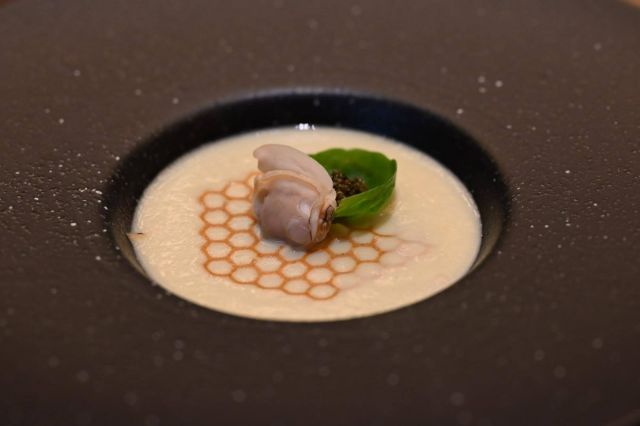
Located on the fourth floor of the Shimaya building, adjacent to Minamiza Theater, The Sakura serves French cooking that is approachable and intentional. The meal is tinged with the beauty of Japanese cuisine that excites diners no matter where they come from. Flavors are bold, taking inspiration not only from French and Japanese culinary genres but also from modern Chinese cooking and beyond.
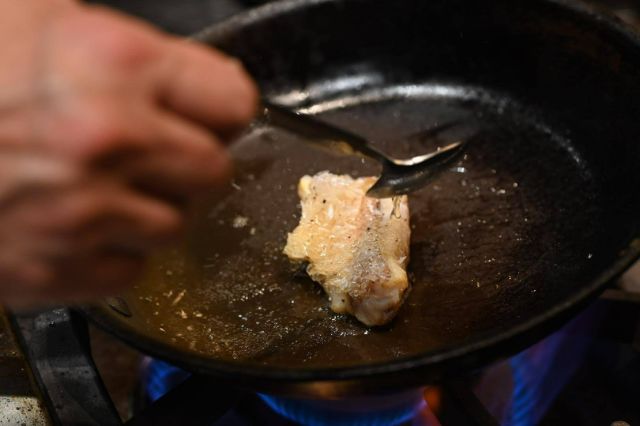
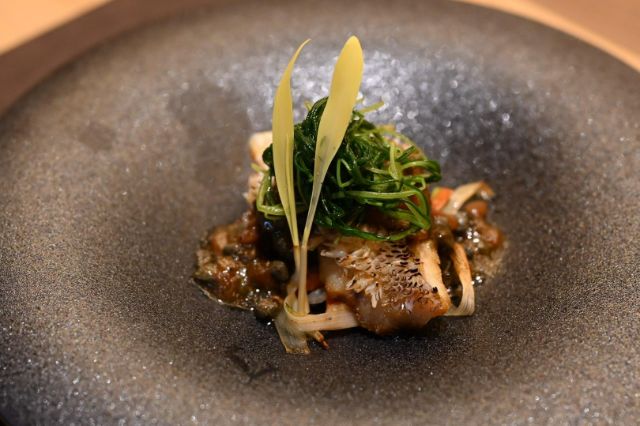
It’s Chef Homochi’s personal preference not to pull any punches with his food. While traditional French cuisine can lean heavy with cream and foie gras, and orthodox Japanese dishes rely on the repetitive flavors of dashi, miso, and soy sauce, The Sakura makes room for more creativity. Striking plating makes use of Kyoto heirloom vegetables and flavorful sauces. The cook on each individual element is particularly well done, whether it’s amadai (tilefish) basted in butter until its scales curl up into crispy flakes or wagyu handled with precision over a charcoal grill.
Dishes Focused on Deliciousness
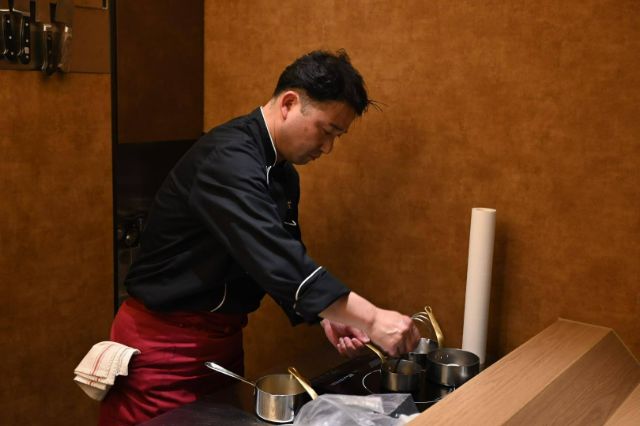
If you press him about the thought process behind his course, the chef will simply reply that he devised each plate to express the varied, delicious experiences he wants to deliver, in the order that feels best to do so. He admits there is no complicated backstory or convoluted agenda. Though he hails from Kagoshima, there are no childhood memories of subtropical summers he intends to convey through a particular treatment of duck or fish.
That said, take the time to inquire about his hometown, and you may receive a brief introduction to Kagoshima food culture via tear-jerking yuzukosho. Yuzukosho is a fiery local specialty that enhances broths with herbal, bitter citrus. Perfect for clearing out the sinuses or warming up on a winter’s day. Add it to simple dashi broth for a pop of vibrance, or enjoy it with Chef Homochi’s winter menu to experience this spice at its most essential.
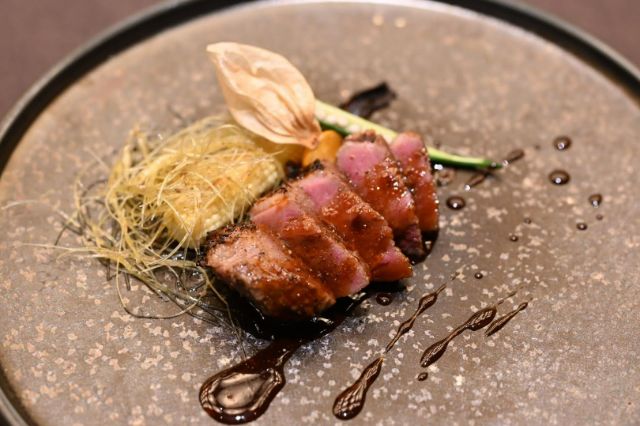
The menu changes seasonally, but there are some elements that are always present. As much as possible, Chef Homochi uses Kyoto heirloom vegetables, called Kyoyasai, to evoke a sense of place. His duck appetizer also feels rooted in local tradition, as duck dishes have been enjoyed in Kyoto for centuries. Its central river, Kamogawa, is even named after the local fowl, called “kamo” in Japanese.
Complex Combinations
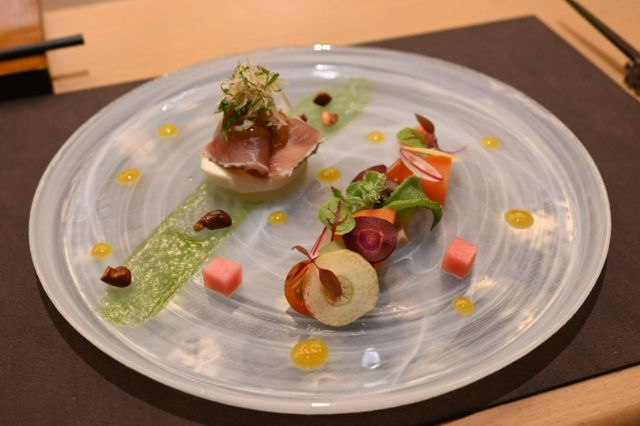
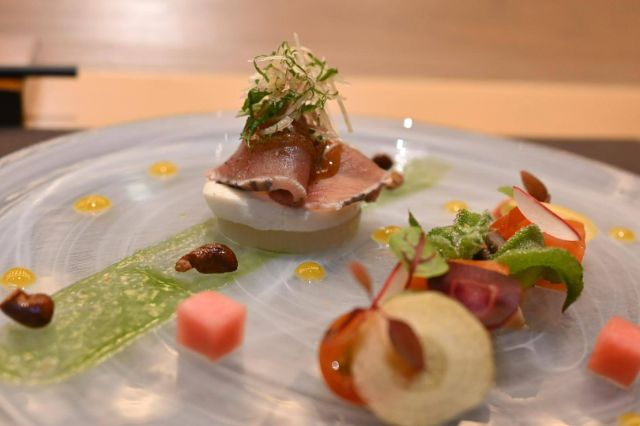
“Take one thing off” is not a strongly held philosophy here. The chef proves more can be more with dishes like his seared katsuo (skipjack tuna/bonito). Soft slices of Kochi Prefecture katsuo are topped with pungent summer yakumi (elements that offer brightness and bitterness, like myoga and citrus peel), layered on a sweet onion mousse that further rests on a simmered round of daikon beneath. On the same plate, two distinct sauces and a wide variety of flavorful local produce, including ice plant and Kyoto carrots, further receive the textural support of roasted nuts.
With a dozen different ingredients highlighted on one plate, each element has its own story to tell. The joy comes from eating it your way – equipped with a spoon, fork, and chopsticks, diners can mix the elements together for a complex and layered bite, or play them off against each other individually.
The Sakura
Closed: Wednesday
Average price: [Dinner] 22,000 JPY / [Lunch] 14,000 JPY
Access: A 1-minute walk from Exit 6 of Gion-Shijo Station on the Keihan Main Line, located on the 4F of the Shimaya Building next to the Minami-za Theater
Address: 4F, Shimaya Bldg., 206 Nakano-cho, 4 Jodori Yamato Ojinishiiru, Higashiyama-ku, Kyoto-shi, Kyoto Map
More Details Reservation
Unique Ingredients and Sourcing
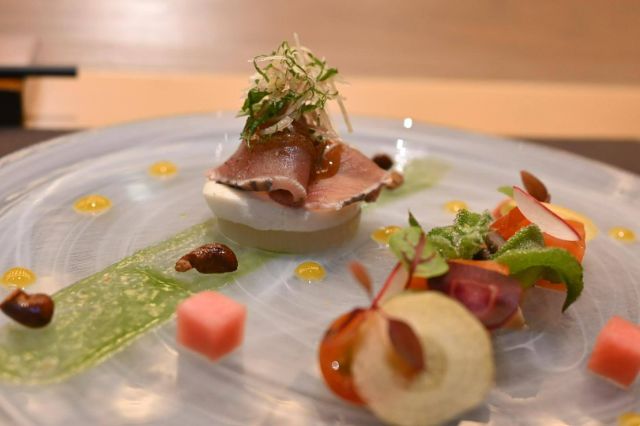
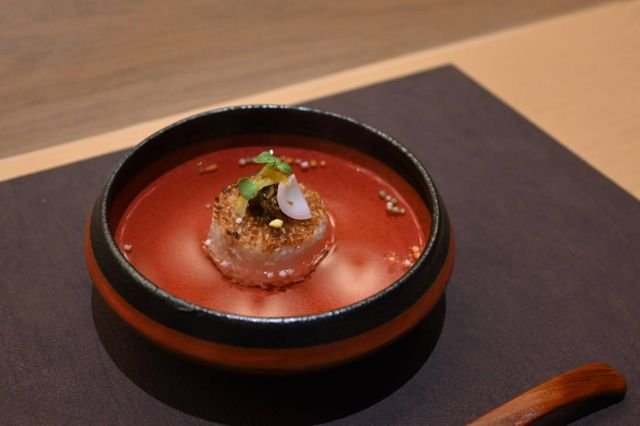
Today, The Sakura uses a wide variety of Kochi-raised ingredients, particularly in regards to protein. Many locals know Kochi as one of the best places to catch katsuo, a fish enjoyed on its own but also made into katsuobushi, the key ingredient for Japanese dashi. The katsuo used at The Sakura comes from this area and is predictably high quality.
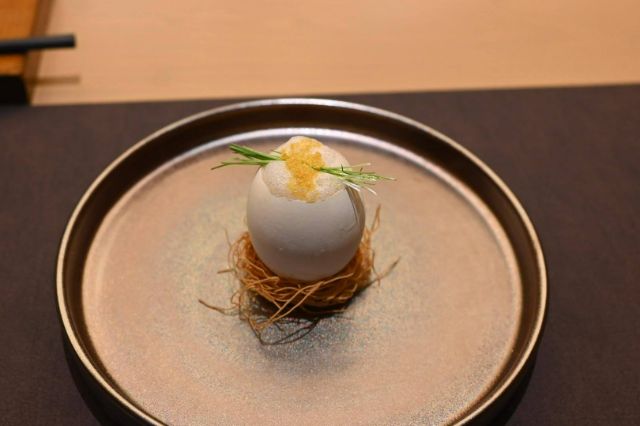
Another dish worth highlighting is the egg served as the first course at The Sakura. The egg is first soft-boiled mi-cuit, so that the yolk becomes jammy while the whites remain unset, similar to Japanese onsen tamago. It sits on a nest of kadaifa, with foam and green onion on top until the chef covers it all in a glass dome and pumps in smoke from sakura wood chips.
The result is a dish that embodies French flavors with ingredients only found in Japan. Even the eggs themselves are special, a brand notable for its high concentration of folic acid and essential nutrients.
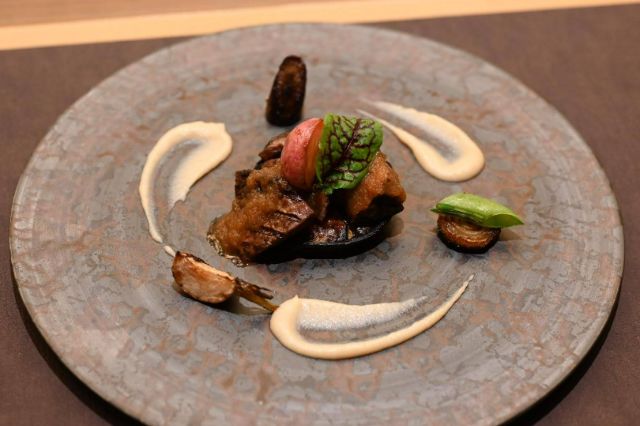
For his main meat dish, Chef Homochi uses not black kuroge wagyu, but akaushi, a smaller breed of Japanese wagyu. The cattle supplied to The Sakura are raised by college students studying agriculture in Kochi. These “red” cattle are distinguished not only by their appearance, but the quality of their meat. While black wagyu cattle have famous marbling and a melt in the mouth texture, akaushi have more similarities to angus beef in their lean meat and robust beefiness.
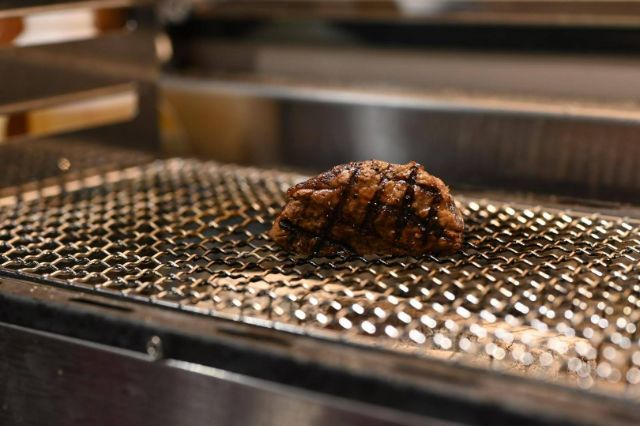
In fact, many diners find that akaushi is more enjoyable to eat as a steak, as its fat never becomes overwhelming. At The Sakura, it’s charcoal grilled and served on top of a meltingly soft Kamonasu eggplant that offers all the soft satisfaction diners look for in a wagyu dish. The course is perfect for summer, offering diners a chance to enjoy wagyu without leaving in a food coma.
Highlights from Summer at The Sakura
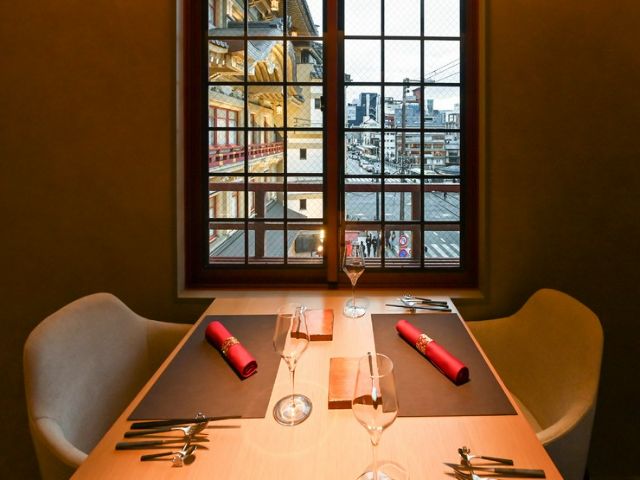
Photo: SAVOR JAPAN
Outside of the food, The Sakura features a skylight that sets a perfect mood day or night, casting the dining room in beautiful sunlight or blue hues on rainy days. It makes the restaurant an equally good choice for lunch as dinner. From the private dining room, diners will see the cityscape of Kyoto, the Minamiza theater, and the Kamo River reflected in the mirror. Take a selfie to remember the memory, or just enjoy seeing the scenery out the window.
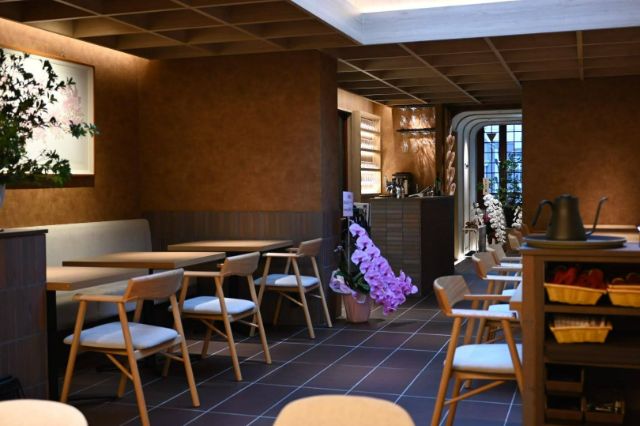
Summer brings with it matsuri, increased tourism numbers, and crowds. Hidden away on the fourth floor, The Sakura is a mature retreat from the rowdy streets below. Row after row of wine by the bottle greet guests to their right as they walk in from the elevators, and a majestic counter front and center sets the stage no matter where you’re seated.
Echoes of Japan in the Details
The shime course, a carb to close out the meal, brings the meal back to its locale with a humble ochazuke. Ochazuke, rice in broth or tea, is simple, comforting, and quintessentially Japanese. At The Sakura, a single lily bulb petal is tinted pink, evoking a sakura flower, and colorful arare rice puffs dance in the soup as it is poured. These little rice balls are a tradition of Kyoto, a thoughtful, subtle touch that makes sure diners never forget where they are.
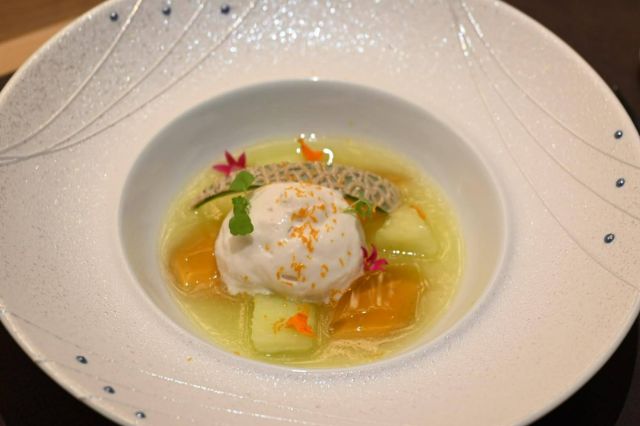
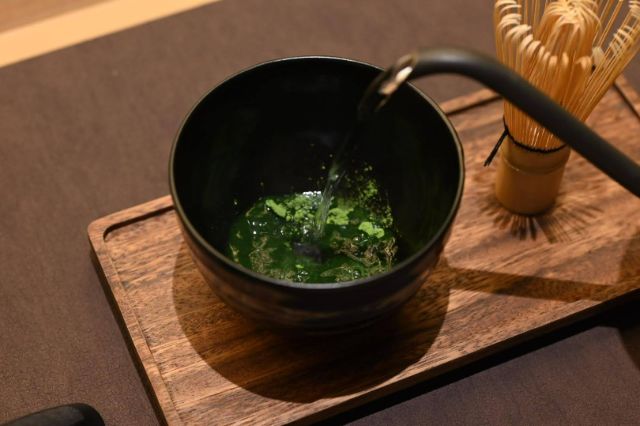
The meal closes with a summery melon dessert made with premium green and orange melons and dressed with a light ice cream. Mignardises include a tea-flavored financier and perfectly crunchy creme brulee served with matcha tea. Guests are encouraged to try whisking their own matcha for the full experience, but in the worst case the patissier and chef are happy to help out. While the meal overall is French-inspired food, the finish includes distinctly Japanese elements that leave guests satisfied with the spirit of Kyoto.
It’s quick and easy to plan your unforgettable meal at The Sakura by reserving on SAVOR JAPAN. Make it a Kyoto trip to remember at the charming, newly opened restaurant conveniently located from major Kyoto sightseeing areas like Yasuka shrine, Gion, and Minamiza Theater.
The Sakura
Closed: Wednesday
Average price: [Dinner] 22,000 JPY / [Lunch] 14,000 JPY
Access: A 1-minute walk from Exit 6 of Gion-Shijo Station on the Keihan Main Line, located on the 4F of the Shimaya Building next to the Minami-za Theater
Address: 4F, Shimaya Bldg., 206 Nakano-cho, 4 Jodori Yamato Ojinishiiru, Higashiyama-ku, Kyoto-shi, Kyoto Map
More Details Reservation
What kind of food does The Sakura serve?
The Sakura serves French-inspired cuisine using Japanese ingredients from Kyoto and Kochi prefecture. Flavors are bold, using a combination of Western and traditional Japanese seasonings. Diners can expect to enjoy uncommon seasonal produce and ingredients such as wagyu.
What is the atmosphere at The Sakura?
The Sakura provides a relaxed, open space, where diners can freely chat with each other at tables or interact with the chef behind the counter. The private room offers views of Minamiza Theater and a selfie mirror, perfect for friend groups or families.
How do I make a reservation at The Sakura?
Reservations are available at SAVOR JAPAN. For same day reservations, call the store directly.
Disclaimer: All information is accurate at time of publication.
Thank you for reading our article.
Our goal is to take your culinary journey to the next level by helping you find the best restaurant. With SAVOR JAPAN, you can search and make reservations for
the French restaurants found in and around Kyoto that fill your needs.
Discover more French restaurants by area
- Tokyo Area
- Near Tokyo
- Kyoto and Osaka Area
- Hokkaido Area
- Northern Honshu (Tohoku)
- Central Honshu (Chubu)
- Western Honshu (Chugoku)
- Shikoku
- Kyushu
- Okinawa and Ryukyu Islands
Discover more restaurants to eat Italian/French Cuisine by area
Keywords
Related Articles
-
Takeout and Delivery in Kyoto: Top 5 Western-style Restaurants
There are times when you just need or want to stay home. In light of the recent stay-home situations (as of May 2020), many restaurants in Japan have started offering takeout and delivery services. Now that we are spending more time home, why not start helping your local community by ordering takeout and delivery? Here are 5 Western-style restaurants in Kyoto that offers takeout or delivery services. Not living in Kyoto? Check out the list of restaurants in Tokyo offering takeout or delivery, or see the full list of restaurants all over Japan on Hitosara website (in Japanese only).
-
5 Restaurants in Kyoto with Extra Hygiene Measures to Fight Coronavirus
Is it safe now to eat out in Kyoto? Is it not? It is still in the gray area. But if you need some time to refresh your mind and belly, it might be the time to go out and eat, as long as you follow the safety protocol. It is now more important than ever to carefully choose where to eat. We have picked up 5 restaurants in Kyoto where hygiene and safety are the utmost importanceーother than the food.
-
5 Recommended Restaurants to Visit Near Famous Cherry Blossom Viewing Spots in Kyoto
When it comes to spring in Kyoto, cherry blossom viewing is a must. Kyoto City is home to numerous cherry blossom spots, where various types of cherry blossoms, such as Somei Yoshino and weeping cherry trees, compete to bloom beautifully. After enjoying the splendid cherry blossoms, it's time to satisfy your appetite. Here are some recommended restaurants near famous cherry blossom viewing spots where you can stop by during your cherry blossom viewing outing.
-
Recommended Restaurants to Visit While Touring the Three Major Cities in the Kansai Area | Keihanshin
Kyoto, Osaka, and Kobe are collectively referred to as "Keihanshin," representing the three major cities of the Kansai region. Each city has its own unique atmosphere, making it a popular area for travelers to explore. After touring around each place, one would definitely want to enjoy delicious meals unique to each city. Let's introduce some recommended restaurants in the Keihanshin area for travelers.
-
French & Italian Cuisine for a Luxurious Treat | Kyoto & Osaka
When visiting Kansai, Kyoto and Osaka are must-visit destinations filled with tourist and gourmet spots. This time, we introduce some luxurious French and Italian restaurants from these two cities. Enjoy a relaxing space for adults, beautifully crafted dishes made from high-quality ingredients, and delicious drinks that will soothe you, making for a memorable moment in your journey.
New Articles
-
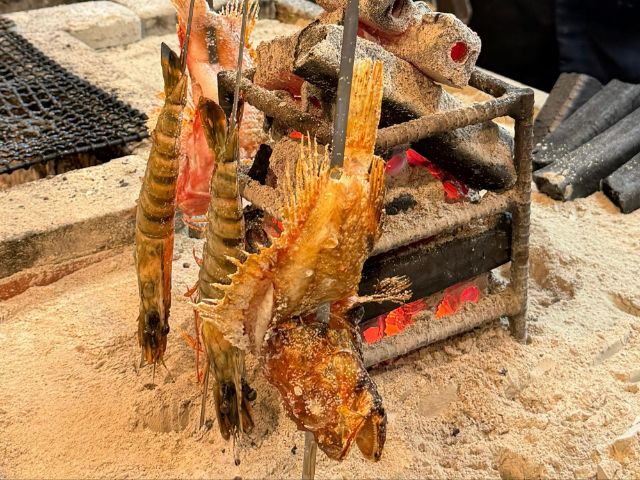
Beyond Sushi: Discover Robatayaki and Fresh Seafood in Nakano, Tokyo
-
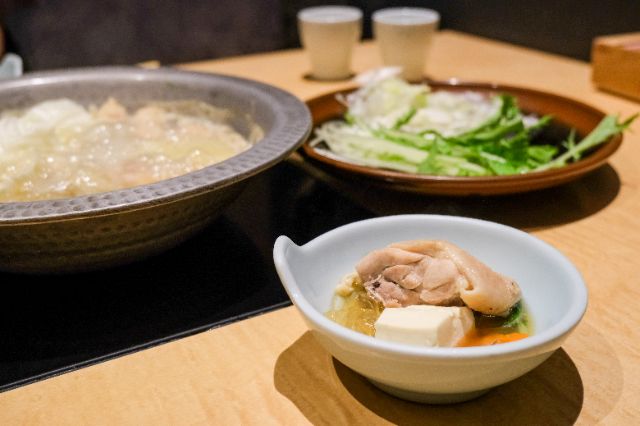
More Than Chicken Soup: Mizutaki at Hakata Hanamidori
-
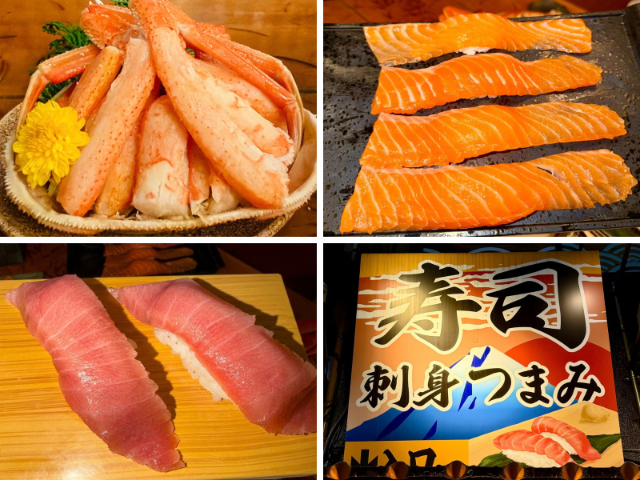
All-You-Can-Eat Sushi & Snow Crab in Tokyo: Ultimate Seafood Experience at Fujiyama Akihabara
-
![[2026 Latest] Enjoy Halal Wagyu in Tokyo! Wagyu Ramen at "Shinjuku-tei", All-You-Can-Eat Sushi at "FUJIYAMA", and Yakiniku at "Gyumon" - Recommended Guide](https://rimage.savorjapan.com/svj/image/discover_oishii_japan/7283/article_head_150x105z.jpg?t=1789035665)
[2026 Latest] Enjoy Halal Wagyu in Tokyo! Wagyu Ramen at "Shinjuku-tei", All-You-Can-Eat Sushi at "FUJIYAMA", and Yakiniku at "Gyumon" - Recommended Guide
-
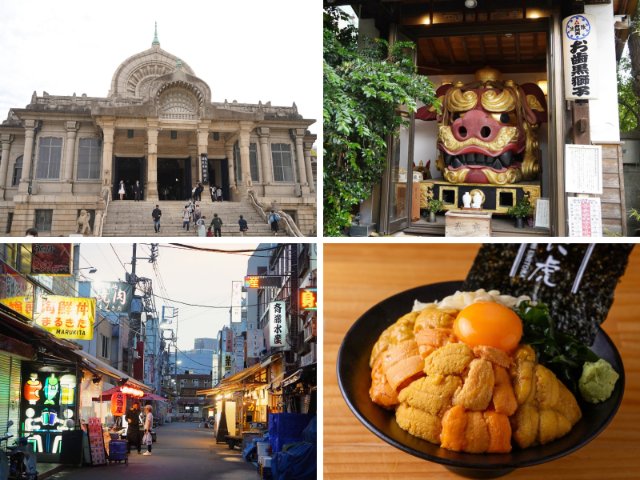
Tsukiji Market Half-Day Walking Guide | 5 Must-Visit Attractions + Most Efficient Route (Including Transportation and Business Hours Summary)
Categories
Cuisine
- Bars (24)
-
Japanese Cuisine (713)
- Kaiseki (51)
- Nabe (23)
- Okonomiyaki (25)
- Shabu Shabu (39)
- Soba (19)
- Sushi (151)
- Tempura (22)
- Teppanyaki (46)
- Shojin Ryori (4)
- Tonkatsu (16)
- Kushiyaki (10)
- Yakitori (46)
- Sukiyaki (36)
- Japanese Cuisine (344)
- Oyster (3)
- Sashimi/ Seafood (35)
- Unagi (eel) (39)
- Motsu Nabe (offal hotpot) (12)
- Mizutaki (chicken hot pot) (5)
- Oden (9)
- Kaisendon (seafood bowl) (12)
- Udon (3)
- Taverns(Izakaya) Cuisine (138)
- Western Cuisine (42)
- Italian/French Cuisine (98)
- Yakiniku/Steak (237)
- Chinese Cuisine (27)
- Ramen (Noodles) Cuisine (25)
- Cafe/Sweets (71)
- Other Asian Cuisine (5)
- Global/International Cuisine (7)
- Alcohol (59)
- Other (11)
Area
- Shikoku (10)
- Kyoto and Osaka (358)
-
Tokyo (496)
- Tokyo (310)
- Ginza (51)
- Roppongi (26)
- Shibuya (30)
- Shinjuku (51)
- Asakusa (21)
- Ebisu (15)
- Tsukiji (13)
- Tokyo Landmarks (5)
- Ueno (25)
- Akihabara (10)
- Ikebukuro (14)
- Jiyugaoka, Denenchofu, Nakameguro (9)
- Shimokitazawa (4)
- Kichijoji (3)
- Tachikawa (1)
- Omotesando, Harajuku, Aoyama (20)
- Akabane (1)
- Kagurazaka (4)
- Akasaka (9)
- Odaiba (2)
- Tsukishima, Harumi, Toyosu (3)
- Near Tokyo (107)
- Okinawa and Ryukyu Islands (59)
- Hokkaido (125)
- Northern Honshu (Tohoku) (31)
- Central Honshu (Chubu) (146)
- Western Honshu (Chugoku) (33)
- Kyushu (98)
Archives
- October 2026(3)
- September 2026(8)
- August 2026(6)
- July 2026(11)
- June 2026(10)
- May 2026(7)
- April 2026(18)
- March 2026(3)
- February 2026(13)
- January 2026(11)
- December 2025(9)
- November 2025(4)
- October 2025(3)
- September 2025(6)
- August 2025(11)
- July 2025(19)
- June 2025(18)
- May 2025(34)
- April 2025(43)
- March 2025(30)
- February 2025(36)
- January 2025(26)
- December 2024(69)
- November 2024(31)
- October 2024(15)
- September 2024(38)
- August 2024(65)
- July 2024(31)
- June 2024(54)
- May 2024(61)
- April 2024(28)
- March 2024(31)
- February 2024(42)
- January 2024(32)
- December 2023(20)
- November 2023(5)
- October 2023(10)
- September 2023(7)
- August 2023(18)
- July 2023(8)
- June 2023(8)
- May 2023(18)
- April 2023(15)
- March 2023(1)
- January 2023(1)
- April 2022(2)
- March 2022(2)
- February 2022(1)
- January 2022(1)
- July 2021(1)
- March 2021(1)
- February 2021(1)
- December 2020(1)
- October 2020(1)
- September 2020(2)
- August 2020(10)
- July 2020(6)
- June 2020(9)
- May 2020(11)
- April 2020(8)
- March 2020(8)
- February 2020(13)
- January 2020(9)
- December 2019(24)
- November 2019(8)
- August 2019(14)
- July 2019(15)
- June 2019(18)
- May 2019(17)
- April 2019(16)
- March 2019(22)
- February 2019(22)
- January 2019(26)
- December 2018(34)
- November 2018(40)
- October 2018(32)
- September 2018(11)
- August 2018(8)
- July 2018(6)
- June 2018(9)
- May 2018(10)
- April 2018(21)
- March 2018(74)
- February 2018(39)
- January 2018(26)
- December 2017(60)
Keywords
- Omakase
- Accessible
- Affordable
- All-You-Can-Eat
- Amazing Scenery
- anime
- Art
- Autumn
- Awards
- Beer Gardens
- Breakfast
- Chef Recommendations
- Cherry Blossoms
- Chinese
- Close To Station
- Condiments
- Counter
- Coupon
- Crab
- Culture
- Dassai
- Dates
- delivery
- Early Summer
- Editor's Recommendation
- English Available
- Event
- Expo
- Fall Leaves
- Family-Friendly
- Famous Restaurant
- Famous Tourist Spot
- Fast Food
- festival
- fireworks
- Flower Farm
- Free Wi-Fi
- French
- Great Location
- Guide
- Halal
- Hibachi
- hotpot
- How To
- hydrangea
- Hygiene
- Illumination
- Italian
- Izakaya
- Japanese
- Japanese alcohol
- jingisukan
- Kaiseki
- Kappo
- Kushiage
- Kushikatsu
- Kyoto
- Late-Night
- Lunch
- Manners
- matsusakagyu
- Michelin
- mizutaki
- Model Course
- monjayaki
- motsunabe
- Mt.Fuji
- Multilingual Menus
- Nabe
- Narita Airport
- New Year
- Ninja
- Noodle
- Oden
- Okonomiyaki
- omotenashi
- Onsen
- Osaka
- Osaka Station
- Photogenic Site
- pizza
- PR
- Private Room
- Ramen
- ranking
- Recipe
- Regional Cuisine
- Resort
- Rice Bowl Dish (Donburi)
- robata
- sacred places
- Sake
- Sakura
- Sashimi
- sea urchin
- Setouchi Area
- Shabu Shabu
- sightseeing
- Signature Dish
- Soba
- Solo Diners Welcomed
- Spicy Food
- Spring
- Steak
- Summer
- Sunflower
- Sushi
- takeout
- Teppanyaki
- Terrace Seating
- Tokyo
- Tokyo Experiences
- Tokyo Skytree
- Tokyo Tower
- unagi
- UNESCO
- Vegan
- Vegetarian
- Wagyu
- What Popular Gourmet Sites Recommend
- Whisky
- Wine Bar
- Winter
- Wisteria
- Workshop
- World Heritage Site
- World Writers
- Yakiniku
- Yoshoku
- Yuba
- Zen
Discover Restaurants By Area
-

Tokyo Area
Japan's largest city, Tokyo, is the center of culinary culture in Japan. Countless Tokyo restaurants serve every kind of food imaginable and the Toyosu fish market keeps restaurants stocked with the nation's finest fish.
-

Near Tokyo
Coastal areas, mountains and valleys surrounding Tokyo are bursting with tourist destinations, such as hot springs and ski slopes, where many unique foods are only available locally.
-

Kyoto and Osaka Area
The cities of Kyoto and Osaka, together with their surrounding areas, have greatly influenced Japan's culinary culture since the 7th Century. The region is renowned for its entertainment, Kobe beef, and wide-ranging traditional dishes.
-

Hokkaido Area
The island of Hokkaido is home to wide-ranging produce of the finest quality, such as rice, meat, vegetables, fish and fruit. Popular dishes from Hokkaido include robatayaki (food slowly roasted on skewers) and Sapporo miso ramen.
-

Northern Honshu (Tohoku)
The northern end of Japan's main island, Honshu, is renowned for its seasonal fruit and vegetables, nation-leading harvest of fish (especially tuna from Ohma), and delicious beef from Yonezawa, Sendai and Yamagata.
-

Central Honshu (Chubu)
Chubu is in the center of Japan's main island, Honshu, and its culinary culture reflects its position between Japan's western and eastern halves. Delicious Hida beef, world-famous Mount Fuji and many acclaimed sake breweries are in Chubu.
-

Western Honshu (Chugoku)
Chugoku, on the southwest of Japan's main island, is rich with diverse produce. Many of its products are praised as Japan's best, including Matsuba crabs from Tottori and oysters from Hiroshima. Its pears and muscats are also top grade.
-

Shikoku
The mild climate of Shikoku is ideal for growing citrus fruit such as sudachi. Shikoku is also famous for Sanuki udon noodles, huge yields of tiger prawn from Ehime Prefecture and the best torafugu (tiger globefish) in the country.
-

Kyushu
Western culture was first introduced to Japan through Kyushu, Japan's third largest island, where the influence of Portuguese and other western cuisine influenced the creation of a colorful culinary tradition.
-

Okinawa and Ryukyu Islands
Okinawa, Japan’s southernmost prefecture, is a treasure trove of distinctive dishes and drinks that have become popular throughout Japan, including Okinawa soba, unique sushi toppings and Awamori distilled liquor.