This Tokyo Omakase Takes Requests: Shimbashi Ren
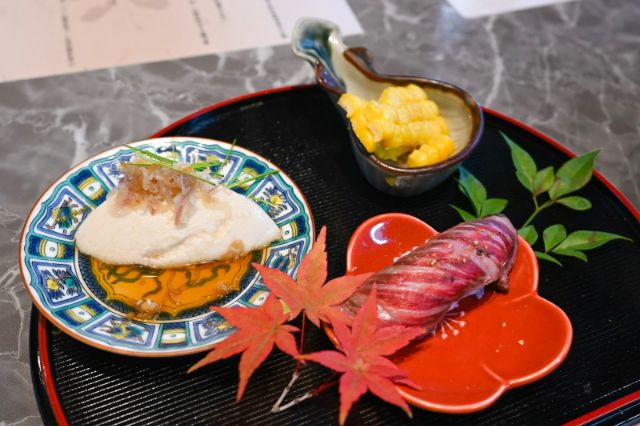

Shimbashi Ren
Closed: Sunday, National Holidays
Average price: [Dinner] 5,000 JPY
Access: It is within the approach to Karasumori Shrine, a 5-minute walk from the Karasumori Exit of Shimbashi Station
Address: 3F, Shimbashi Edoman Bldg., 2-15-5, Shimbashi, Minato-ku, Tokyo Map
More Details Reservation
Shimbashi Ren
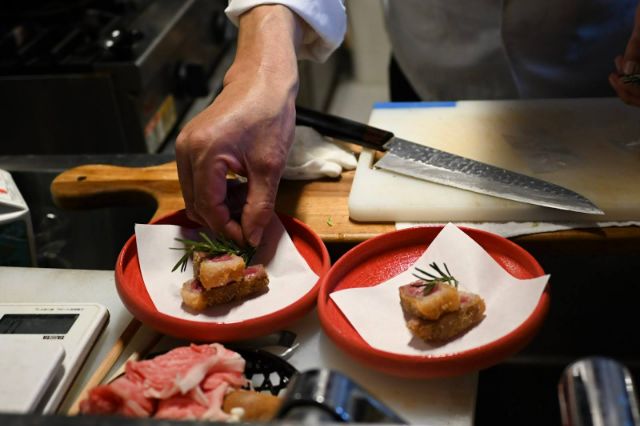
Shimbashi Ren is just one part of a multi-national group of “Ren”’s. The owner originally opened the venue as a place to enjoy Shimbashi’s usual nightlife. However, his concept changed when he realized the huge gap in Shimbashi’s food scene: Where were people going for omakase? Attentive to the lack of options for a leisurely, elegant meal in the neighborhood, he developed Shimbashi Ren. In the process, he made a place that subverts what omakase can be.
Location and Venue
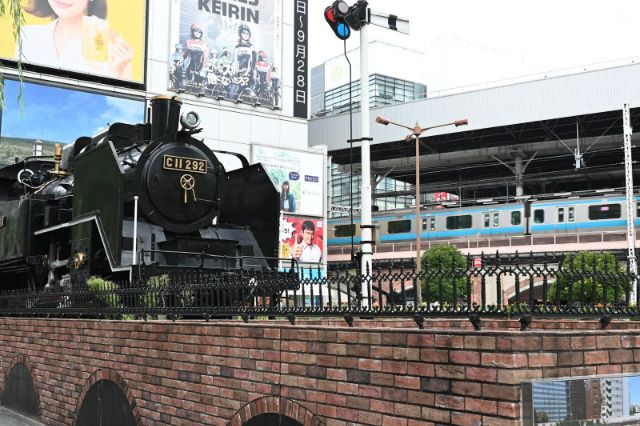
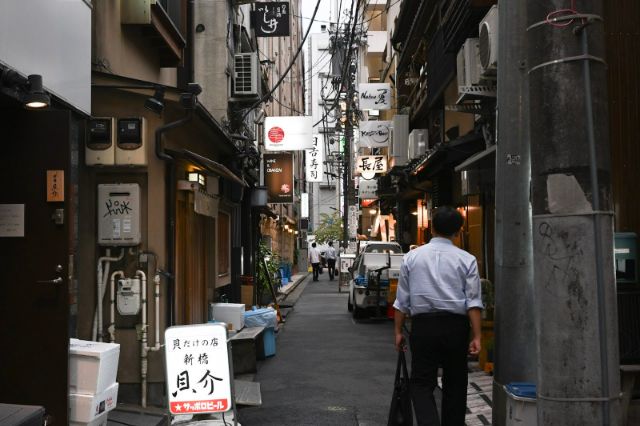
Just five minutes from Shimbashi Station, beyond the impressive steam locomotive and Karasumori Shrine, you’ll find Shimbashi Ren. Its unlikely location is enough to have first-timers pause at the door, only to be shocked that yes, this is indeed the place.
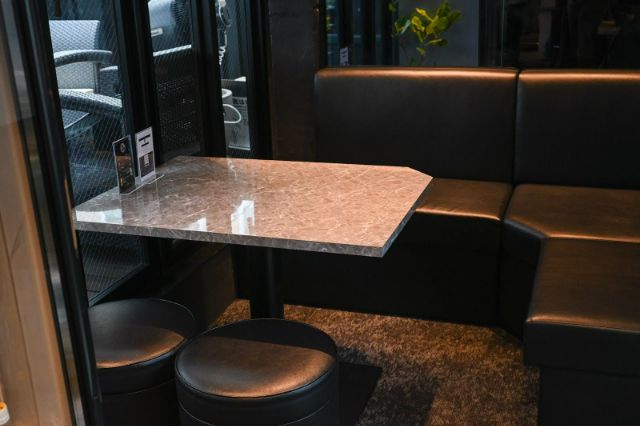
Even with its updated, luxury dining concept, the two marble tables and sofa bench-seating set the space apart from any typical kaiseki venue. It’s pleasant for guests who want to chat while they dine, and makes it easier to accommodate larger groups for special occasions. The unassuming venue proves that top of the line omakase doesn’t need to be limited to cedar countertops. With the right chef and the right guests, anywhere can transform into a high-end restaurant.
A world-class chef
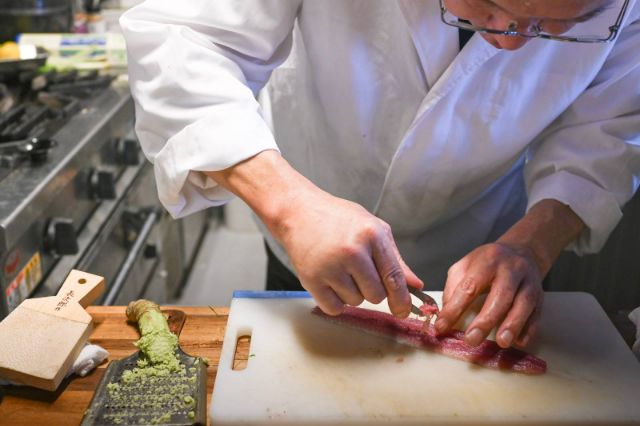
At Shimbashi Ren, that perfect chef is globe-trotting master Kenichi Kanauchi. He was born in Miyagi prefecture, but later moved on to positions at some of the world’s most widely respected 5-star hotels, such as the Waldorf Astoria Dubai, where he served as head chef of its on-site Japanese restaurant. His experience has brought him to places like the Shangri-la hotel in Beijing China, where he was also head chef, Thailand, Indonesia, the Philippines and beyond. Chef Kanauchi’s over four decades of experience in Japanese cuisine overseas makes him especially qualified for the position.
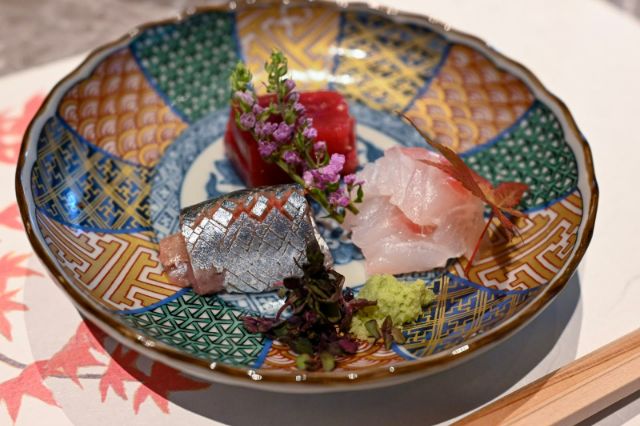
Using the know-how he’s learned abroad, the chef produces course menus that hit all the high notes travelers are looking for. But his menus also stay true to Japanese techniques. Dishes like a magical sorbet-gel palate cleanser and unexpected sanma sashimi display chef Kanauchi’s personal talent and creativity.
Satisfying balance of luxury and tradition
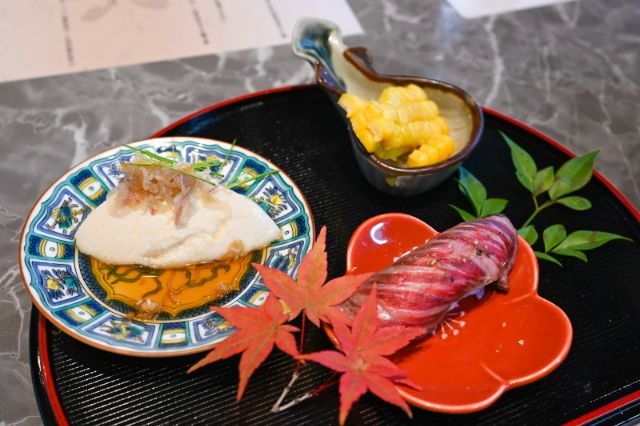
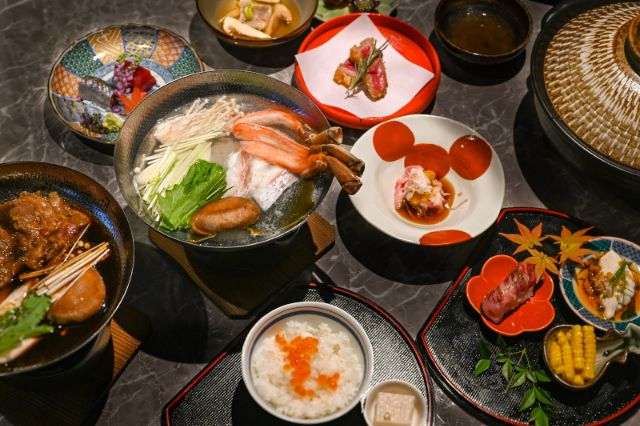
Each course is filled with the kind of craveable ingredients travelers hope to check off when visiting Japan. These range from rich wagyu and bluefin tuna to crab, uni and salmon roe. Wine pairings suited to Japanese ingredients are a particular recommendation of the chef, reflecting an attunement to global palates. Even with its approachable price point, the omakase course features not one, not two, but four opportunities to try domestic wagyu. Despite offering fully vegan menus on request, the restaurant describes itself as a “niku kappo,” where beef is the focus of a loose omakase style.
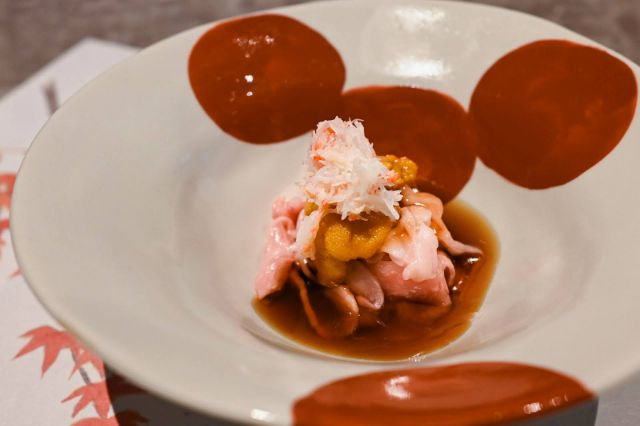
First, a thin strip is laid over sushi rice to make a wagyu nigiri. Later, soft curls of delicate wagyu are accompanied by crab and ikura in a chilled dish that drips with luxury. For the main course, diners can choose between seafood or meat hot pots, including a classic sukiyaki served with an egg for dipping and packed with tender wagyu.
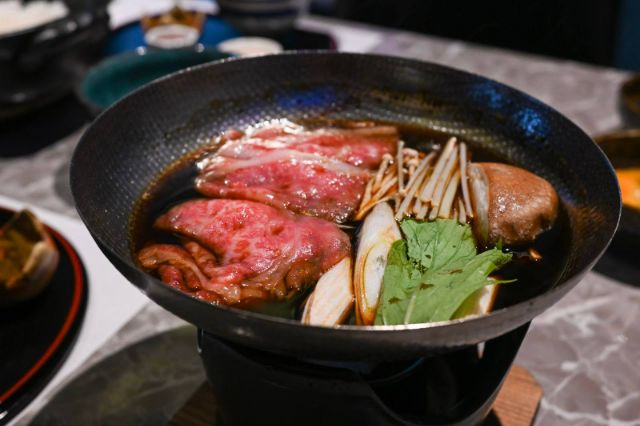
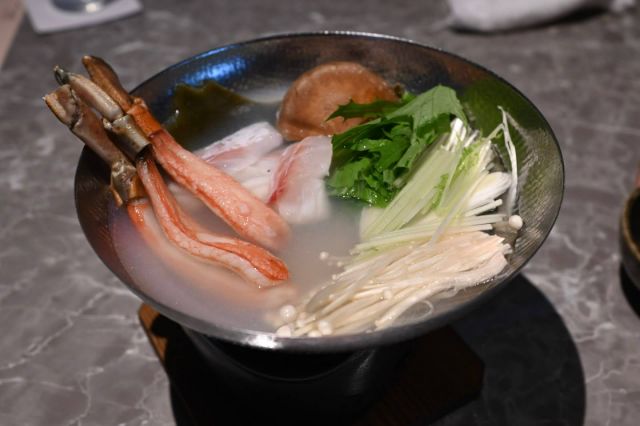
The seafood option contains premium crab and seabream. The broth for the seafood hotpot is an excellent example of Japanese food at its best – just kombu kelp steeped in water, infused with the flavor of crab and seabream as it simmers.
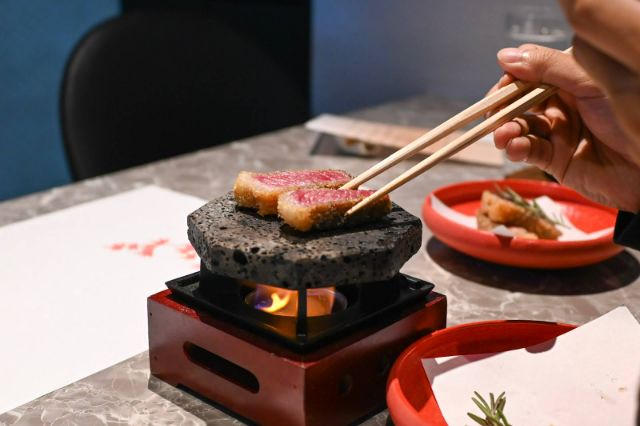
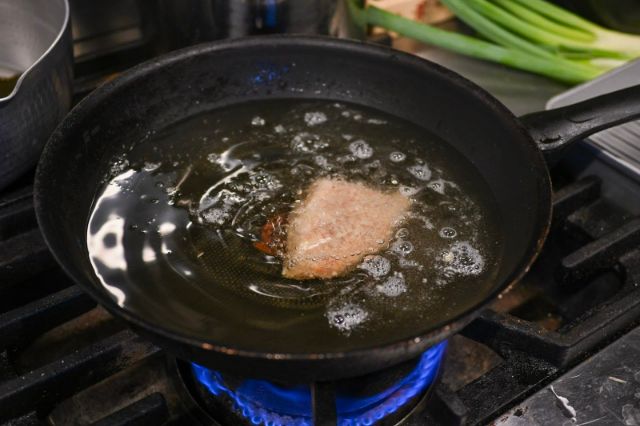
The gyu-katsu, a hunk of succulent wagyu breaded and flash-fried to a rare center, is served on a hot lava stone, allowing guests to continue cooking the meat to their preferred doneness. Typical of wagyu, the slices are buttery and dripping with rendered fat, perfect with a little house-made sauce. In an average omakase setting, if the steak is served rare, that would be the end of the story. Shimbashi Ren invites guests to do a little doctoring to make sure the meal is just as they prefer. It’s a simple gesture, but speaks to the chef’s conscientiousness.
Shimbashi Ren
Closed: Sunday, National Holidays
Average price: [Dinner] 5,000 JPY
Access: It is within the approach to Karasumori Shrine, a 5-minute walk from the Karasumori Exit of Shimbashi Station
Address: 3F, Shimbashi Edoman Bldg., 2-15-5, Shimbashi, Minato-ku, Tokyo Map
More Details Reservation
A customer-first mindset
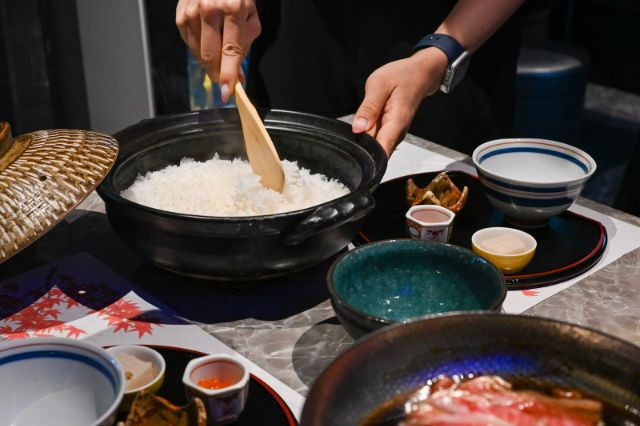
A gentle understanding between chef and diner, that leaves room for cultural and personal differences, allows both parties to enjoy an authentic meal with no friction. Even more than the unforgettably quirky venue, lack of friction is the defining feature of dining at Shimbashi Ren. Both chef and restaurateur work to craft meals with the guests at top of mind.
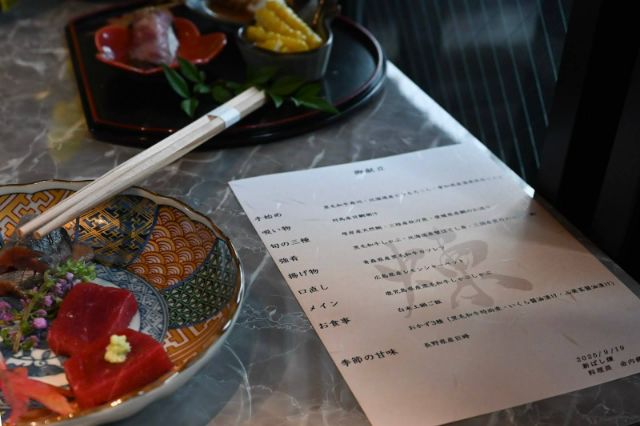
In addition to the standard omakase menus, made using ingredients procured the morning of service to guarantee the freshest ingredients available, diners can reserve a course menu tailored exactly to their preferences and dietary needs. Yes, Shimbashi Ren is an omakase restaurant. But here, omakase invites diners to play a role, too. When guests want to try seasonal delicacies or enjoy their favorite foods in a new context, the restaurant will build an omakase menu to highlight those ingredients at their very best.
If guests need a vegan omakase or a seafood free course, both of which pose a challenge at traditional kaiseki restaurants, Shimbashi Ren will adjust to suit those needs, all while displaying what it really means to enjoy omakase in Japan. While working within the classic repertoire of washoku, Chef Kanauchi and Shimbashi Ren are able to craft meals that are just as memorable as they are delicious.
Genuine washoku omakase with international appeal, developed over decades
If there are parts of your Japanese culinary adventure you haven’t managed to check off yet, confidently leave your requests to Shimbashi Ren, and prepare for an unforgettable night of omakase tailored to you.
Shimbashi Ren
Closed: Sunday, National Holidays
Average price: [Dinner] 5,000 JPY
Access: It is within the approach to Karasumori Shrine, a 5-minute walk from the Karasumori Exit of Shimbashi Station
Address: 3F, Shimbashi Edoman Bldg., 2-15-5, Shimbashi, Minato-ku, Tokyo Map
More Details Reservation
Disclaimer: All information is accurate at time of publication.
Thank you for reading our article.
Our goal is to take your culinary journey to the next level by helping you find the best restaurant. With SAVOR JAPAN, you can search and make reservations for
the Japanese Cuisine and Sashimi/ Seafood restaurants found in and around Tokyo that fill your needs.
Discover more Japanese Cuisine and Sashimi/ Seafood restaurants by area
- Tokyo Area
- Near Tokyo
- Kyoto and Osaka Area
- Hokkaido Area
- Northern Honshu (Tohoku)
- Central Honshu (Chubu)
- Western Honshu (Chugoku)
- Shikoku
- Kyushu
- Okinawa and Ryukyu Islands
Discover more restaurants to eat Japanese Cuisine and Japanese Cuisine by area
Keywords
Related Articles
-
5 Selected Restaurants to Enjoy High-Quality Japanese Cuisine in Ginza, Tokyo
Ginza, a representative bustling district of Japan, is lined with numerous high-end brand shops from around the world, serving as a hub for culture, fashion, and commerce. Here, we introduce restaurants where one can enjoy high-quality Japanese cuisine in this sophisticated area. We have carefully selected only those restaurants that are not only delicious but also stylish and comfortable. If one visits Ginza, they should definitely stop by.
-
Best Wagyu Burger in Asakusa, Tokyo | Wagyu Brothers
We ate Wagyu Brothers’ fusion burgers for the fourth of July. It was a nostalgic taste of home with real Japanese tradition. This neighborhood burger joint, not even 100 paces from Asakusa’s main drag, creates culture-crossing soul food with U.S. hospitality and artisan omotenashi.
-
THE SAKAI Tokyo Kyobashi: Art-Infused Omakase Sushi Experience
Experience sushi mastery born in Frankfurt Germany and reinvisioned at its roots. THE SAKAI Tokyo, part of Chef Hiro Sakai’s MICHELIN award winning brand, is the newest addition to its legacy of international sushi culture. Visit in Kyobashi for a full culinary experience made with respect for international guests and local authenticity.
-
Azabudai Yuuri, a Bold New Sushi Omakase Near Tokyo Tower
When restaurants make the decision to appeal to international visitors, they often choose one of two routes: focus on cuisine that global guests will recognize, or hope they’ll learn to tread water with an immersion in Japanese tradition. At his new sushi restaurant near Azabudai Hills and Tokyo Tower, head chef Takahashi Yuta uses his childhood abroad to forge a third route: livening up Edomae sushi with clear English and a big personality.
-
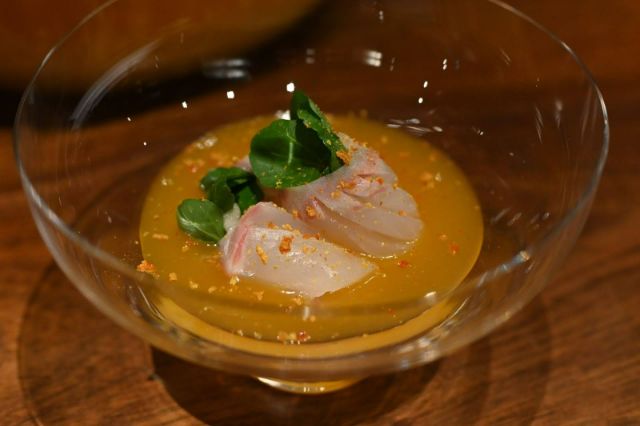
Where Kaiseki meets Fermentation: Experimental Washoku & Soba in Azabu-Juban at Hidden Gem Restaurant Honda
Honda Azabu-juban can be summed up in one word: eclectic. Its owner and mastermind, Chef Honda, is a sommelier, soba-artisan, and distinctly quirky guy wrapped in a cool chef package. For more than a decade, he has taken on independent challenges and devised menus that express his personality for guests’ enjoyment. In its current iteration, Chef Honda’s fermentation-forward course menu reinterprets Japanese food with creativity and confidence, blending classics with unexpected details that don’t fail to delight.
![[2026 Edition] Tokyo's Night Cherry Blossoms | Famous Spots and Nearby Restaurants](https://rimage.savorjapan.com/svj/image/discover_oishii_japan/6918/article_head.jpg?t=1768883377)
New Articles
-
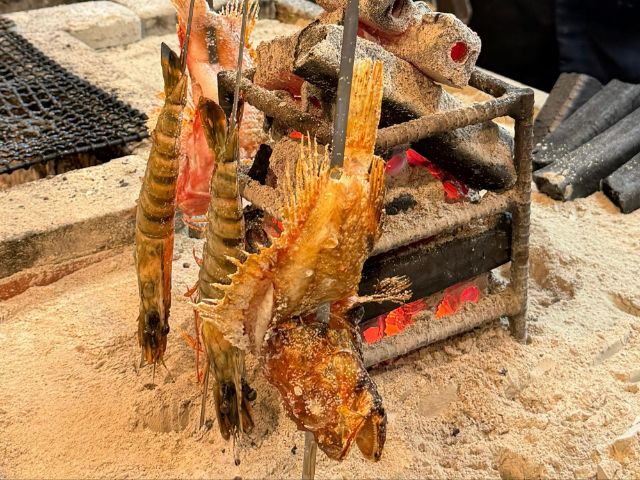
Beyond Sushi: Discover Robatayaki and Fresh Seafood in Nakano, Tokyo
-
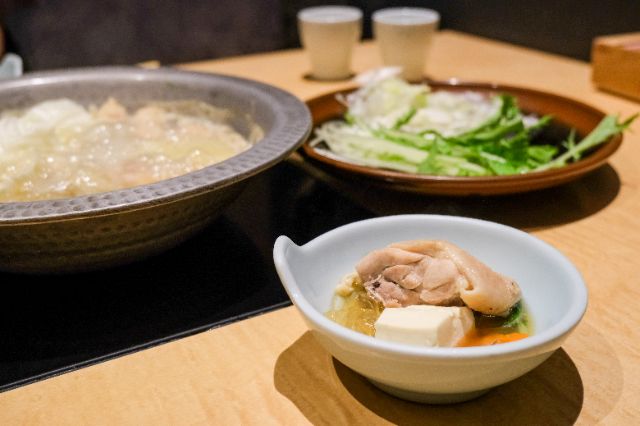
More Than Chicken Soup: Mizutaki at Hakata Hanamidori
-
All-You-Can-Eat Sushi & Snow Crab in Tokyo: Ultimate Seafood Experience at Fujiyama Akihabara
-
Tsukiji Market Half-Day Walking Guide | 5 Must-Visit Attractions + Most Efficient Route (Including Transportation and Business Hours Summary)
-
Ueno Wagyu Yakiniku USHIHACHI Kiwami | A Guide to Black Wagyu Beef Yakiniku Near Ueno Station
Categories
Cuisine
- Bars (24)
-
Japanese Cuisine (713)
- Kaiseki (51)
- Nabe (23)
- Okonomiyaki (25)
- Shabu Shabu (39)
- Soba (19)
- Sushi (151)
- Tempura (22)
- Teppanyaki (46)
- Shojin Ryori (4)
- Tonkatsu (16)
- Kushiyaki (10)
- Yakitori (46)
- Sukiyaki (36)
- Japanese Cuisine (344)
- Oyster (3)
- Sashimi/ Seafood (35)
- Unagi (eel) (39)
- Motsu Nabe (offal hotpot) (12)
- Mizutaki (chicken hot pot) (5)
- Oden (9)
- Kaisendon (seafood bowl) (12)
- Udon (3)
- Taverns(Izakaya) Cuisine (138)
- Western Cuisine (42)
- Italian/French Cuisine (98)
- Yakiniku/Steak (237)
- Chinese Cuisine (27)
- Ramen (Noodles) Cuisine (25)
- Cafe/Sweets (71)
- Other Asian Cuisine (5)
- Global/International Cuisine (7)
- Alcohol (59)
- Other (11)
Area
- Shikoku (10)
- Kyoto and Osaka (358)
-
Tokyo (496)
- Tokyo (310)
- Ginza (51)
- Roppongi (26)
- Shibuya (30)
- Shinjuku (51)
- Asakusa (21)
- Ebisu (15)
- Tsukiji (13)
- Tokyo Landmarks (5)
- Ueno (25)
- Akihabara (10)
- Ikebukuro (14)
- Jiyugaoka, Denenchofu, Nakameguro (9)
- Shimokitazawa (4)
- Kichijoji (3)
- Tachikawa (1)
- Omotesando, Harajuku, Aoyama (20)
- Akabane (1)
- Kagurazaka (4)
- Akasaka (9)
- Odaiba (2)
- Tsukishima, Harumi, Toyosu (3)
- Near Tokyo (107)
- Okinawa and Ryukyu Islands (59)
- Hokkaido (125)
- Northern Honshu (Tohoku) (31)
- Central Honshu (Chubu) (146)
- Western Honshu (Chugoku) (33)
- Kyushu (98)
Archives
- October 2026(3)
- September 2026(7)
- August 2026(6)
- July 2026(11)
- June 2026(10)
- May 2026(7)
- April 2026(18)
- March 2026(3)
- February 2026(13)
- January 2026(11)
- December 2025(9)
- November 2025(4)
- October 2025(3)
- September 2025(6)
- August 2025(11)
- July 2025(19)
- June 2025(18)
- May 2025(34)
- April 2025(43)
- March 2025(30)
- February 2025(36)
- January 2025(26)
- December 2024(69)
- November 2024(31)
- October 2024(15)
- September 2024(38)
- August 2024(65)
- July 2024(31)
- June 2024(54)
- May 2024(61)
- April 2024(28)
- March 2024(31)
- February 2024(42)
- January 2024(32)
- December 2023(20)
- November 2023(5)
- October 2023(10)
- September 2023(7)
- August 2023(18)
- July 2023(8)
- June 2023(8)
- May 2023(18)
- April 2023(15)
- March 2023(1)
- January 2023(1)
- April 2022(2)
- March 2022(2)
- February 2022(1)
- January 2022(1)
- July 2021(1)
- March 2021(1)
- February 2021(1)
- December 2020(1)
- October 2020(1)
- September 2020(2)
- August 2020(10)
- July 2020(6)
- June 2020(9)
- May 2020(11)
- April 2020(8)
- March 2020(8)
- February 2020(13)
- January 2020(9)
- December 2019(24)
- November 2019(8)
- August 2019(14)
- July 2019(15)
- June 2019(18)
- May 2019(17)
- April 2019(16)
- March 2019(22)
- February 2019(22)
- January 2019(26)
- December 2018(34)
- November 2018(40)
- October 2018(32)
- September 2018(11)
- August 2018(8)
- July 2018(6)
- June 2018(9)
- May 2018(10)
- April 2018(21)
- March 2018(74)
- February 2018(39)
- January 2018(26)
- December 2017(60)
Keywords
- Omakase
- Accessible
- Affordable
- All-You-Can-Eat
- Amazing Scenery
- anime
- Art
- Autumn
- Awards
- Beer Gardens
- Breakfast
- Chef Recommendations
- Cherry Blossoms
- Chinese
- Close To Station
- Condiments
- Counter
- Coupon
- Crab
- Culture
- Dassai
- Dates
- delivery
- Early Summer
- Editor's Recommendation
- English Available
- Event
- Expo
- Fall Leaves
- Family-Friendly
- Famous Restaurant
- Famous Tourist Spot
- Fast Food
- festival
- fireworks
- Flower Farm
- Free Wi-Fi
- French
- Great Location
- Guide
- Halal
- Hibachi
- hotpot
- How To
- hydrangea
- Hygiene
- Illumination
- Italian
- Izakaya
- Japanese
- Japanese alcohol
- jingisukan
- Kaiseki
- Kappo
- Kushiage
- Kushikatsu
- Kyoto
- Late-Night
- Lunch
- Manners
- matsusakagyu
- Michelin
- mizutaki
- Model Course
- monjayaki
- motsunabe
- Mt.Fuji
- Multilingual Menus
- Nabe
- Narita Airport
- New Year
- Ninja
- Noodle
- Oden
- Okonomiyaki
- omotenashi
- Onsen
- Osaka
- Osaka Station
- Photogenic Site
- pizza
- PR
- Private Room
- Ramen
- ranking
- Recipe
- Regional Cuisine
- Resort
- Rice Bowl Dish (Donburi)
- robata
- sacred places
- Sake
- Sakura
- Sashimi
- sea urchin
- Setouchi Area
- Shabu Shabu
- sightseeing
- Signature Dish
- Soba
- Solo Diners Welcomed
- Spicy Food
- Spring
- Steak
- Summer
- Sunflower
- Sushi
- takeout
- Teppanyaki
- Terrace Seating
- Tokyo
- Tokyo Experiences
- Tokyo Skytree
- Tokyo Tower
- unagi
- UNESCO
- Vegan
- Vegetarian
- Wagyu
- What Popular Gourmet Sites Recommend
- Whisky
- Wine Bar
- Winter
- Wisteria
- Workshop
- World Heritage Site
- World Writers
- Yakiniku
- Yoshoku
- Yuba
- Zen
Discover Restaurants By Area
-

Tokyo Area
Japan's largest city, Tokyo, is the center of culinary culture in Japan. Countless Tokyo restaurants serve every kind of food imaginable and the Toyosu fish market keeps restaurants stocked with the nation's finest fish.
-

Near Tokyo
Coastal areas, mountains and valleys surrounding Tokyo are bursting with tourist destinations, such as hot springs and ski slopes, where many unique foods are only available locally.
-

Kyoto and Osaka Area
The cities of Kyoto and Osaka, together with their surrounding areas, have greatly influenced Japan's culinary culture since the 7th Century. The region is renowned for its entertainment, Kobe beef, and wide-ranging traditional dishes.
-

Hokkaido Area
The island of Hokkaido is home to wide-ranging produce of the finest quality, such as rice, meat, vegetables, fish and fruit. Popular dishes from Hokkaido include robatayaki (food slowly roasted on skewers) and Sapporo miso ramen.
-

Northern Honshu (Tohoku)
The northern end of Japan's main island, Honshu, is renowned for its seasonal fruit and vegetables, nation-leading harvest of fish (especially tuna from Ohma), and delicious beef from Yonezawa, Sendai and Yamagata.
-

Central Honshu (Chubu)
Chubu is in the center of Japan's main island, Honshu, and its culinary culture reflects its position between Japan's western and eastern halves. Delicious Hida beef, world-famous Mount Fuji and many acclaimed sake breweries are in Chubu.
-

Western Honshu (Chugoku)
Chugoku, on the southwest of Japan's main island, is rich with diverse produce. Many of its products are praised as Japan's best, including Matsuba crabs from Tottori and oysters from Hiroshima. Its pears and muscats are also top grade.
-

Shikoku
The mild climate of Shikoku is ideal for growing citrus fruit such as sudachi. Shikoku is also famous for Sanuki udon noodles, huge yields of tiger prawn from Ehime Prefecture and the best torafugu (tiger globefish) in the country.
-

Kyushu
Western culture was first introduced to Japan through Kyushu, Japan's third largest island, where the influence of Portuguese and other western cuisine influenced the creation of a colorful culinary tradition.
-

Okinawa and Ryukyu Islands
Okinawa, Japan’s southernmost prefecture, is a treasure trove of distinctive dishes and drinks that have become popular throughout Japan, including Okinawa soba, unique sushi toppings and Awamori distilled liquor.