Azabudai Yuuri, a Bold New Sushi Omakase Near Tokyo Tower

Introduction
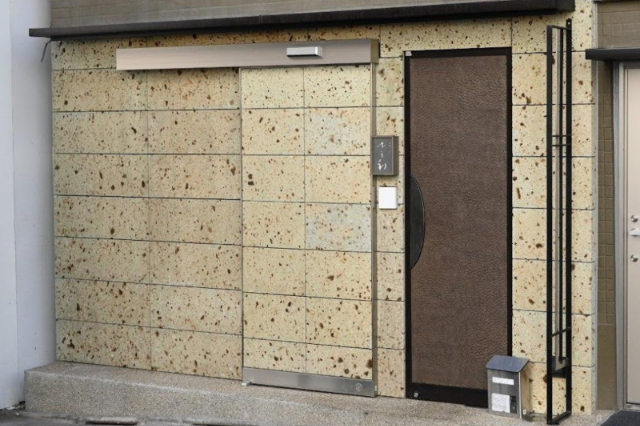
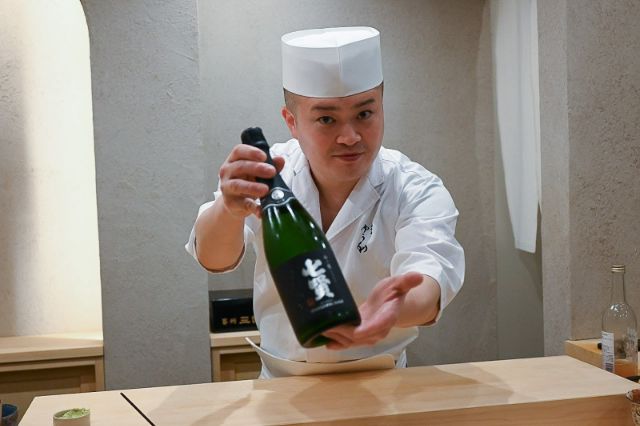
To enter, diners step on a natural stone and pass between rustic mud-walls before sitting at an ipponsugi counter made of a single plank of unstained wood. Each piece of sushi is made by hand and placed on custom servingware in front of guests, to be enjoyed between sips of the chef’s personally-selected sake. All are typical Japanese hallmarks in luxury dining.
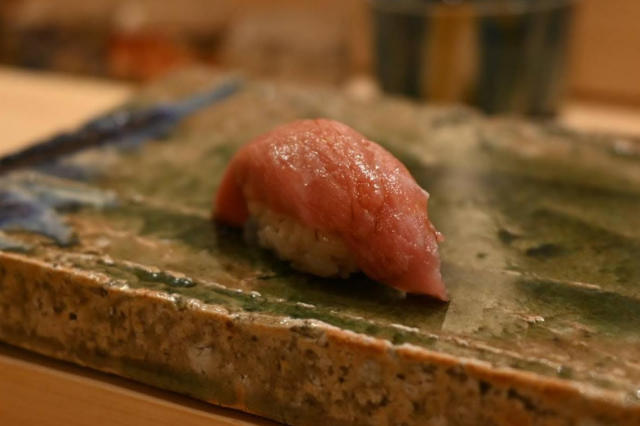
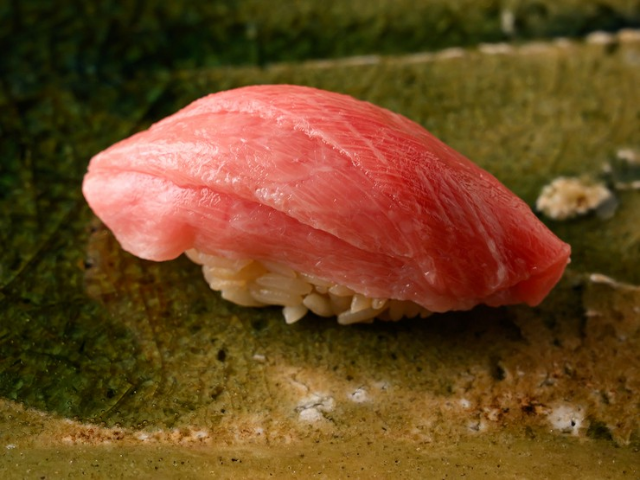
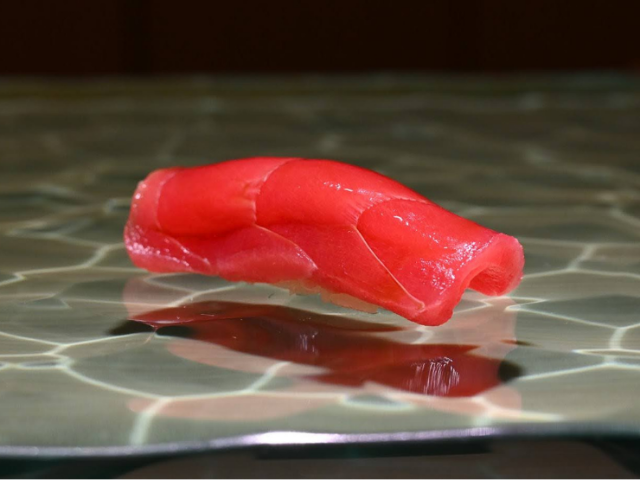
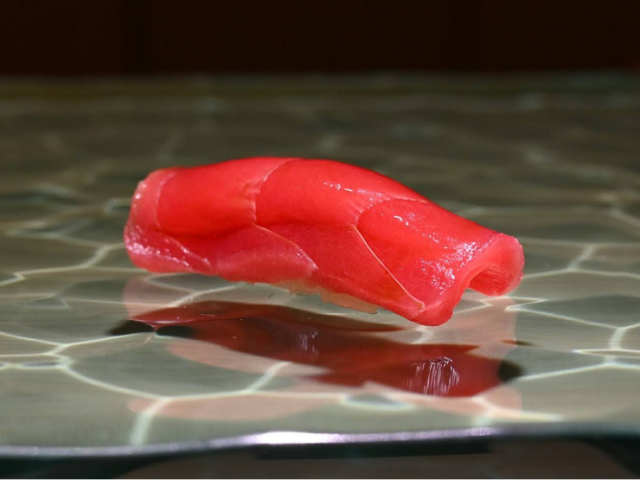
A few squeezes later, diners receive their one-of-a-kind Azabudai Yuuri welcome; a sumptuous otoro (fatty tuna) nigiri, right off the bat. With gasps of awe or sighs of relief from hungry guests, this surprising first bite of sushi reveals that Chef Takahashi is doing things his own way.
Azabudai Yuuri
Closed: Sunday, National Holidays
Average price: [Dinner] 35,000 JPY
Access: 7-minute walk from Kamiyacho Station, 7-minute walk from Akabanebashi Station
Address: 1F, NR Bldg., 2-2-11, Azabudai, Minato-ku, Tokyo Map
More Details Reservation
A Definitive Piece of Tuna
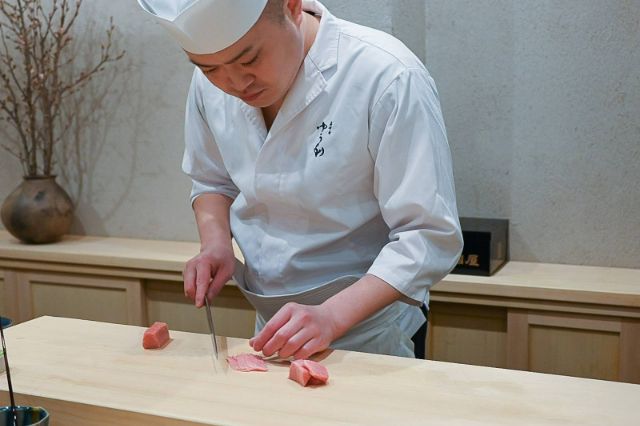
Even tuna itself is divided into several cuts and serving styles, varying in texture and perceived fattyness. As with many fish, knifework plays an important role. Leaving the otoro sinew and cutting vertically to display an accordion of fish is a popular stylistic choice, both lovely and light work for the chef.
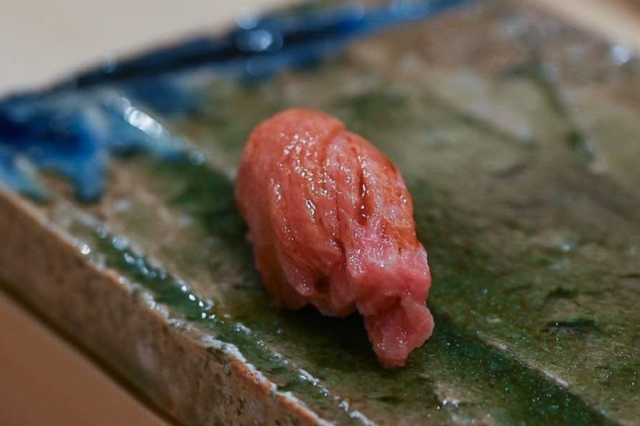
This kind of rationale, for anyone who has lived here for long, might feel shockingly un-Japanese. It’s the opposite of gaman, a cultural principle that encourages “sticking it out”. How can you properly appreciate something if you didn’t patiently wait for it? Chef Takahashi counters, “why risk being too full to genuinely savor it?”
Japanese Food, International Fun
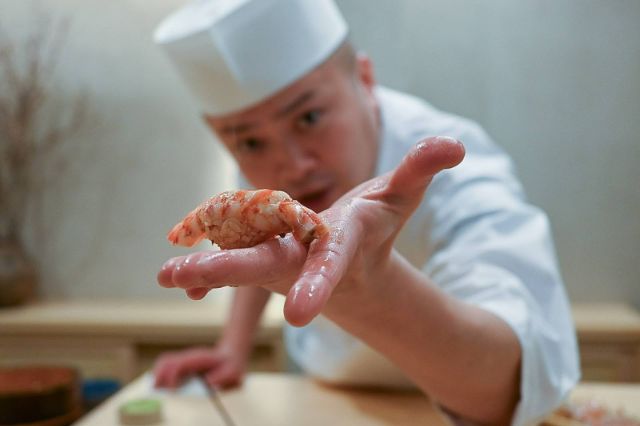
For its global visitors, dining at Azabudai Yuuri feels like being given permission to engage with the meal at a level that’s usually closed off if you’re less than fluent in Japanese – tradition, language, or both. While many restaurants claim to have a “homey” atmosphere, eating at Azabudai Yuuri is like being invited to a friend’s house where you are trusted to get your own drink from the fridge.
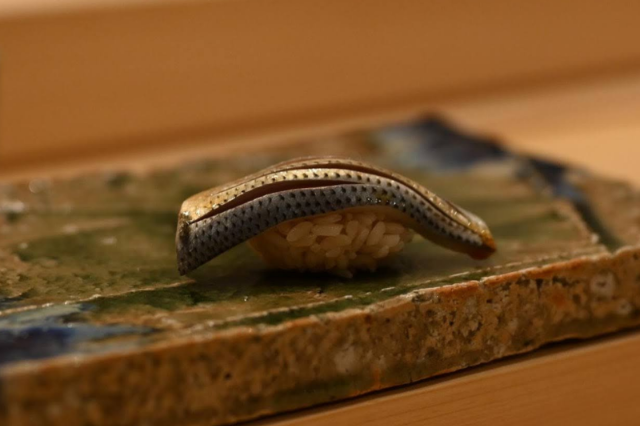
Part of what makes sushi so special is this close relationship and trust between chef and diners. Afterall, this person is handling your food personally. Sometimes he even passes it to you without so much as the transitory barrier of a pair of chopsticks. Rather than trying to reinvent the wheel with globalized sushi flavors and techniques, Chef Takahashi gives all diners real value that only sushi can deliver: intimacy.
Details of the Meal
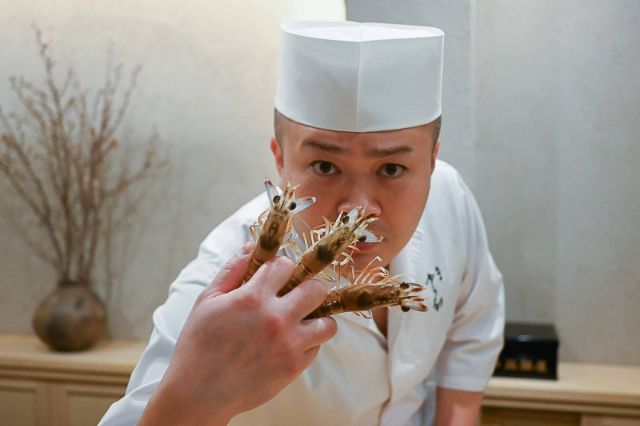
A Unique way to Serve Sushi
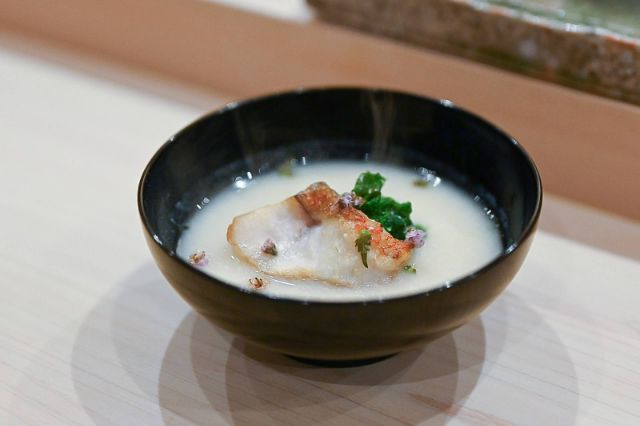
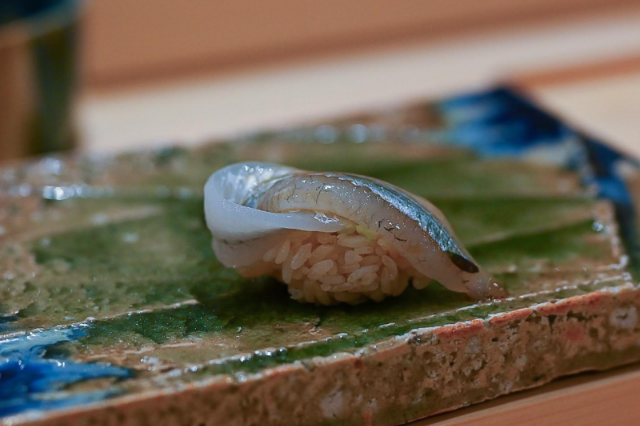
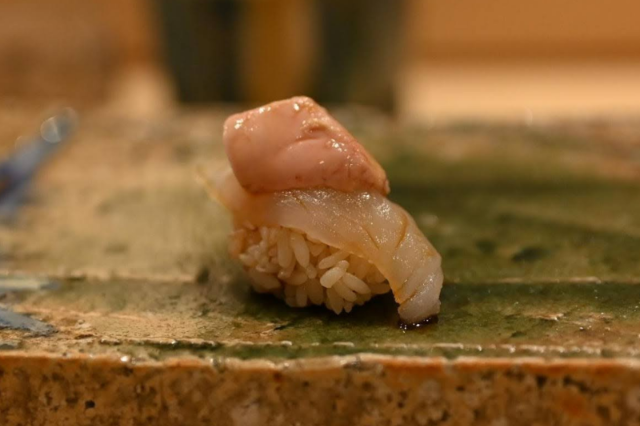
His fish come from around the country, delivered fresh from Toyosu everyday. At a time when aging fish has become the trend, Chef Takahashi relies on his knife skills to emphasize the softness and umami of fresh seafood.
Azabudai Yuuri
Closed: Sunday, National Holidays
Average price: [Dinner] 35,000 JPY
Access: 7-minute walk from Kamiyacho Station, 7-minute walk from Akabanebashi Station
Address: 1F, NR Bldg., 2-2-11, Azabudai, Minato-ku, Tokyo Map
More Details Reservation
Beverages
Chef Takahashi’s Story and Style
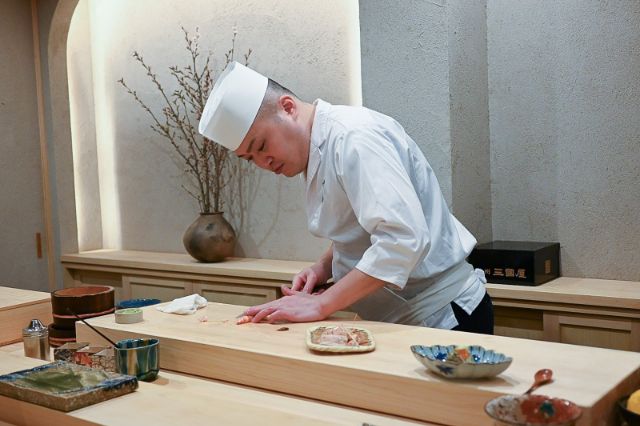
Then he moved on to sushi, studying at legacy neighborhood sushi-ya Matsue in Ebisu, followed by Meguro’s Sushi Rinda, and finally opening Yuuri in September 2025. His style reflects both the familiarity of a sushi counter frequented for many years by the same guests, and the luxury of classical omakase.
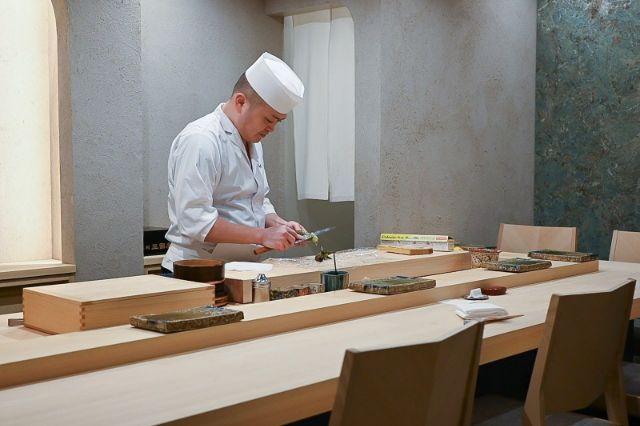
Chef Takahashi remarks that for now, many of his guests are regulars who have visited frequently since opening. On an average night, the counter is filled with Tokyo locals who bring friends and business partners from out of town. They come knowing Azabudai Yuuri is a place where anyone can enjoy legitimate sushi while feeling welcome and wanted, no matter where they come from.
A Mirror of Azabudai, Minutes from Tokyo Tower
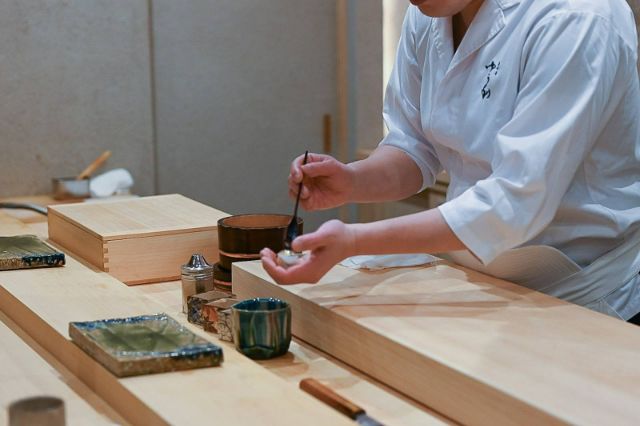
By positioning himself in a lifestyle hub like Azabudai, Chef Takahashi has an opportunity to become a destination without diluting his principles as a chef, something that can be a challenge when a restaurant actively invites international guests. The traditional linguistic vetting process is skipped, and it takes great skill to control a counter in two languages as Chef Takahashi does.
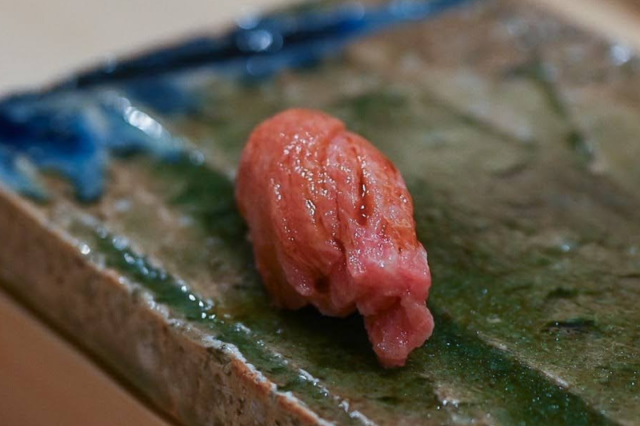
Azabudai Yuuri might not yet have its name in lights, but between the inspiring quality of its sushi and the genuine hospitality, it’s a place diners will want to come back to every time they visit Tokyo. As you head down from Azabudai hills, follow the red beacon of Tokyo Tower peeking behind the buildings. Duck into a hidden street, and you’ll be right at home at Chef Takahashi’s counter, soon to be greeted with that unforgettable piece of otoro.
Azabudai Yuuri
Closed: Sunday, National Holidays
Average price: [Dinner] 35,000 JPY
Access: 7-minute walk from Kamiyacho Station, 7-minute walk from Akabanebashi Station
Address: 1F, NR Bldg., 2-2-11, Azabudai, Minato-ku, Tokyo Map
More Details Reservation
Disclaimer: All information is accurate at time of publication.
Thank you for reading our article.
Our goal is to take your culinary journey to the next level by helping you find the best restaurant. With SAVOR JAPAN, you can search and make reservations for
the Sushi, Sake and Sashimi/ Seafood restaurants found in and around Tokyo and Roppongi that fill your needs.
Discover more Sushi, Sake and Sashimi/ Seafood restaurants by area
- Tokyo Area
- Near Tokyo
- Kyoto and Osaka Area
- Hokkaido Area
- Northern Honshu (Tohoku)
- Central Honshu (Chubu)
- Western Honshu (Chugoku)
- Shikoku
- Kyushu
- Okinawa and Ryukyu Islands
Discover more restaurants to eat Japanese Cuisine, Alcohol and Japanese Cuisine by area
Keywords
Related Articles
-
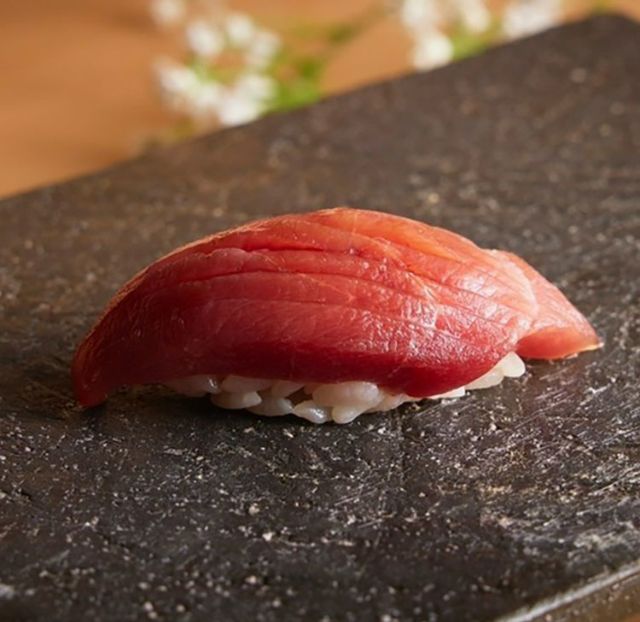
21 Must-Visit Sushi Restaurants in Tokyo
Tokyo is a metropolis with first-class restaurants in every type of cuisine. Naturally, there is a multitude of restaurants serving sushi, which is almost synonymous with Japanese cuisine. This article introduces 21 highly recommended sushi restaurants in Tokyo.
-
The 6 Best Edomae Sushi Restaurants in Tokyo You Must Try
Edo-mae sushi, which has been nurtured in the land of Edo facing Tokyo Bay, is said to have been named after the seafood caught in the sea before Edo. In an era when refrigeration technology was poor, various techniques were developed to ensure that the seafood could be enjoyed in the best possible condition. This time, we will introduce restaurants where one can savor high-end Edo-mae sushi that inherits these techniques.
-
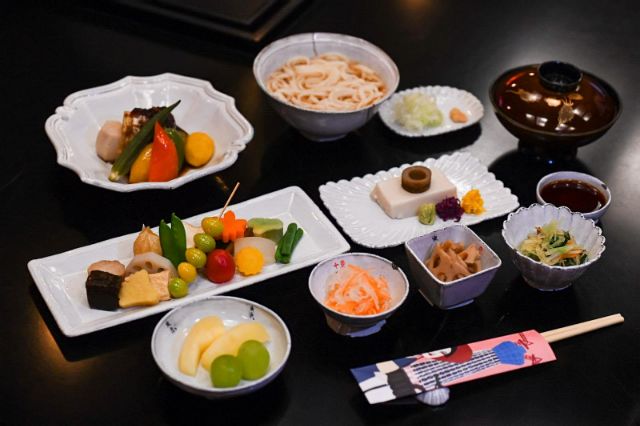
Tokyo October: Japanese Dining with Art & Vegan Shojin Ryori Omakase in Omotesando
Tokyo October serves classical washoku, including vegan shojin ryori and kaiseki in a space that looks like a temple directed by French artistes. The art and architecture comes from renowned design houses, while the food is created by a chef with a deep passion for and study of washoku. He’s followed the traditional cuisine of Japan down to its roots for over thirty years, specializing in Japanese tea ceremony and gastronomy.
-
THE SAKAI Tokyo Kyobashi: Art-Infused Omakase Sushi Experience
Experience sushi mastery born in Frankfurt Germany and reinvisioned at its roots. THE SAKAI Tokyo, part of Chef Hiro Sakai’s MICHELIN award winning brand, is the newest addition to its legacy of international sushi culture. Visit in Kyobashi for a full culinary experience made with respect for international guests and local authenticity.
-
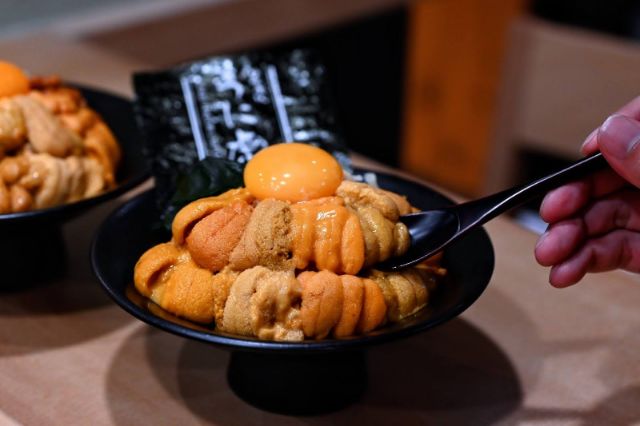
UNITORA Honten : Amazing Uni Sea Urchin Sushi Bowl Donburi in Tsukiji
Do you think you can tell the difference between 5 different uni? At Unitora, a premium uni specialist in Tsukiji outer market, we ate our fill of uni from around Japan, enjoying a seasonal selection from Hokkaido and beyond. They specialize in donburi sushi bowls overflowing with creamy uni.
![[Okinawa] Top 6 Popular Restaurants! Featuring Editor's Recommended Restaurants](https://rimage.savorjapan.com/svj/image/discover_oishii_japan/7017/article_head.jpg?t=1775030975)
![[Roppongi, Tokyo] SUKIYAKI Rokumatsu, Top A5 Wagyu Sukiyaki Recommendations: Encountering the Strangest Surprises in the Most Familiar Dishes](https://rimage.savorjapan.com/svj/image/discover_oishii_japan/7027/article_head.jpg?t=1775634968)
New Articles
-
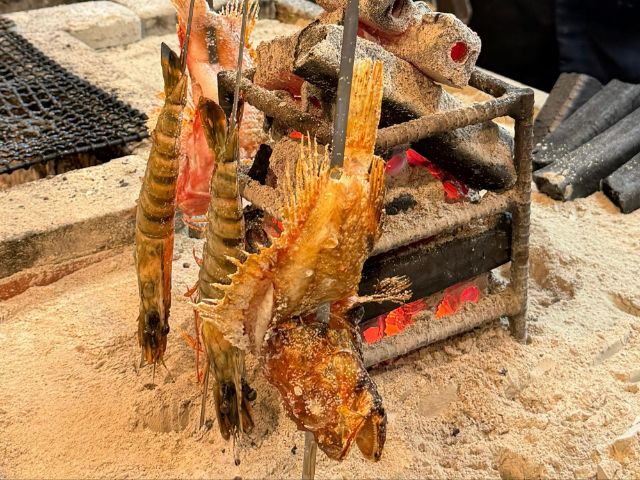
Beyond Sushi: Discover Robatayaki and Fresh Seafood in Nakano, Tokyo
-
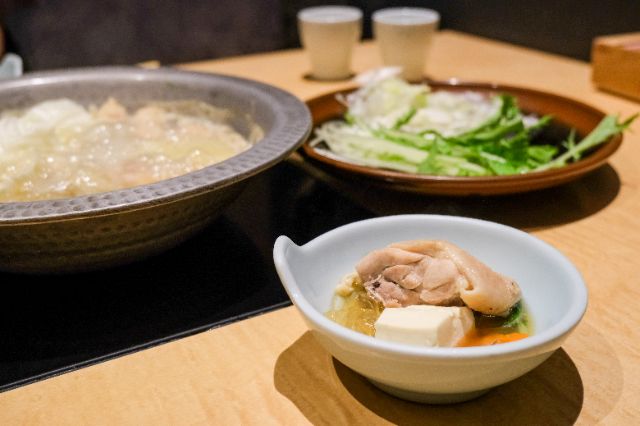
More Than Chicken Soup: Mizutaki at Hakata Hanamidori
-
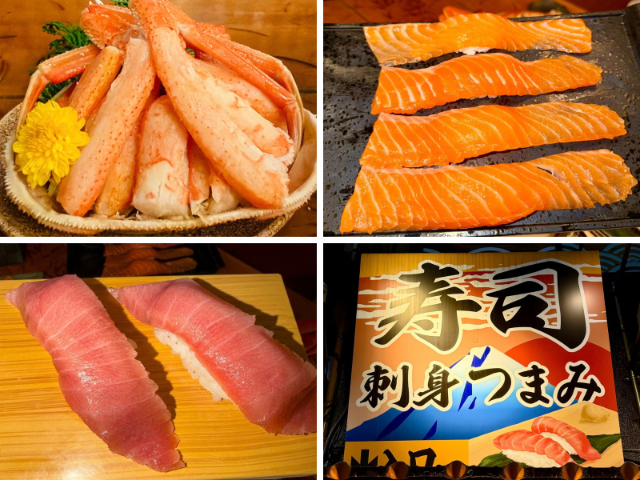
All-You-Can-Eat Sushi & Snow Crab in Tokyo: Ultimate Seafood Experience at Fujiyama Akihabara
-
![[2026 Latest] Enjoy Halal Wagyu in Tokyo! Wagyu Ramen at "Shinjuku-tei", All-You-Can-Eat Sushi at "FUJIYAMA", and Yakiniku at "Gyumon" - Recommended Guide](https://rimage.savorjapan.com/svj/image/discover_oishii_japan/7283/article_head_150x105z.jpg?t=1789035665)
[2026 Latest] Enjoy Halal Wagyu in Tokyo! Wagyu Ramen at "Shinjuku-tei", All-You-Can-Eat Sushi at "FUJIYAMA", and Yakiniku at "Gyumon" - Recommended Guide
-
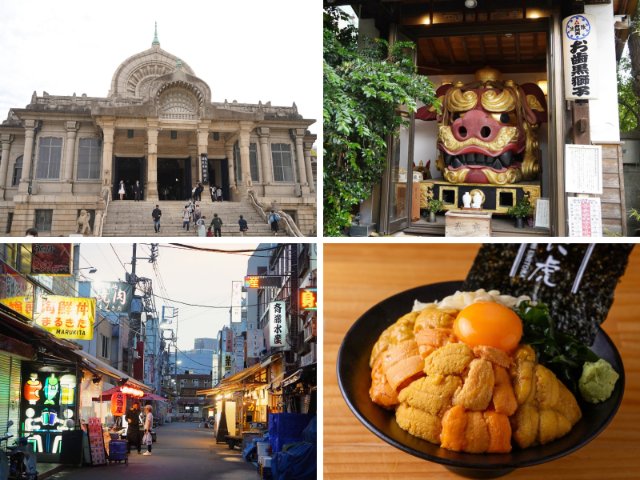
Tsukiji Market Half-Day Walking Guide | 5 Must-Visit Attractions + Most Efficient Route (Including Transportation and Business Hours Summary)
Categories
Cuisine
- Bars (24)
-
Japanese Cuisine (713)
- Kaiseki (51)
- Nabe (23)
- Okonomiyaki (25)
- Shabu Shabu (39)
- Soba (19)
- Sushi (151)
- Tempura (22)
- Teppanyaki (46)
- Shojin Ryori (4)
- Tonkatsu (16)
- Kushiyaki (10)
- Yakitori (46)
- Sukiyaki (36)
- Japanese Cuisine (344)
- Oyster (3)
- Sashimi/ Seafood (35)
- Unagi (eel) (39)
- Motsu Nabe (offal hotpot) (12)
- Mizutaki (chicken hot pot) (5)
- Oden (9)
- Kaisendon (seafood bowl) (12)
- Udon (3)
- Taverns(Izakaya) Cuisine (138)
- Western Cuisine (42)
- Italian/French Cuisine (98)
- Yakiniku/Steak (237)
- Chinese Cuisine (27)
- Ramen (Noodles) Cuisine (25)
- Cafe/Sweets (71)
- Other Asian Cuisine (5)
- Global/International Cuisine (7)
- Alcohol (59)
- Other (11)
Area
- Shikoku (10)
- Kyoto and Osaka (358)
-
Tokyo (496)
- Tokyo (310)
- Ginza (51)
- Roppongi (26)
- Shibuya (30)
- Shinjuku (51)
- Asakusa (21)
- Ebisu (15)
- Tsukiji (13)
- Tokyo Landmarks (5)
- Ueno (25)
- Akihabara (10)
- Ikebukuro (14)
- Jiyugaoka, Denenchofu, Nakameguro (9)
- Shimokitazawa (4)
- Kichijoji (3)
- Tachikawa (1)
- Omotesando, Harajuku, Aoyama (20)
- Akabane (1)
- Kagurazaka (4)
- Akasaka (9)
- Odaiba (2)
- Tsukishima, Harumi, Toyosu (3)
- Near Tokyo (107)
- Okinawa and Ryukyu Islands (59)
- Hokkaido (125)
- Northern Honshu (Tohoku) (31)
- Central Honshu (Chubu) (146)
- Western Honshu (Chugoku) (33)
- Kyushu (98)
Archives
- October 2026(3)
- September 2026(8)
- August 2026(6)
- July 2026(11)
- June 2026(10)
- May 2026(7)
- April 2026(18)
- March 2026(3)
- February 2026(13)
- January 2026(11)
- December 2025(9)
- November 2025(4)
- October 2025(3)
- September 2025(6)
- August 2025(11)
- July 2025(19)
- June 2025(18)
- May 2025(34)
- April 2025(43)
- March 2025(30)
- February 2025(36)
- January 2025(26)
- December 2024(69)
- November 2024(31)
- October 2024(15)
- September 2024(38)
- August 2024(65)
- July 2024(31)
- June 2024(54)
- May 2024(61)
- April 2024(28)
- March 2024(31)
- February 2024(42)
- January 2024(32)
- December 2023(20)
- November 2023(5)
- October 2023(10)
- September 2023(7)
- August 2023(18)
- July 2023(8)
- June 2023(8)
- May 2023(18)
- April 2023(15)
- March 2023(1)
- January 2023(1)
- April 2022(2)
- March 2022(2)
- February 2022(1)
- January 2022(1)
- July 2021(1)
- March 2021(1)
- February 2021(1)
- December 2020(1)
- October 2020(1)
- September 2020(2)
- August 2020(10)
- July 2020(6)
- June 2020(9)
- May 2020(11)
- April 2020(8)
- March 2020(8)
- February 2020(13)
- January 2020(9)
- December 2019(24)
- November 2019(8)
- August 2019(14)
- July 2019(15)
- June 2019(18)
- May 2019(17)
- April 2019(16)
- March 2019(22)
- February 2019(22)
- January 2019(26)
- December 2018(34)
- November 2018(40)
- October 2018(32)
- September 2018(11)
- August 2018(8)
- July 2018(6)
- June 2018(9)
- May 2018(10)
- April 2018(21)
- March 2018(74)
- February 2018(39)
- January 2018(26)
- December 2017(60)
Keywords
- Omakase
- Accessible
- Affordable
- All-You-Can-Eat
- Amazing Scenery
- anime
- Art
- Autumn
- Awards
- Beer Gardens
- Breakfast
- Chef Recommendations
- Cherry Blossoms
- Chinese
- Close To Station
- Condiments
- Counter
- Coupon
- Crab
- Culture
- Dassai
- Dates
- delivery
- Early Summer
- Editor's Recommendation
- English Available
- Event
- Expo
- Fall Leaves
- Family-Friendly
- Famous Restaurant
- Famous Tourist Spot
- Fast Food
- festival
- fireworks
- Flower Farm
- Free Wi-Fi
- French
- Great Location
- Guide
- Halal
- Hibachi
- hotpot
- How To
- hydrangea
- Hygiene
- Illumination
- Italian
- Izakaya
- Japanese
- Japanese alcohol
- jingisukan
- Kaiseki
- Kappo
- Kushiage
- Kushikatsu
- Kyoto
- Late-Night
- Lunch
- Manners
- matsusakagyu
- Michelin
- mizutaki
- Model Course
- monjayaki
- motsunabe
- Mt.Fuji
- Multilingual Menus
- Nabe
- Narita Airport
- New Year
- Ninja
- Noodle
- Oden
- Okonomiyaki
- omotenashi
- Onsen
- Osaka
- Osaka Station
- Photogenic Site
- pizza
- PR
- Private Room
- Ramen
- ranking
- Recipe
- Regional Cuisine
- Resort
- Rice Bowl Dish (Donburi)
- robata
- sacred places
- Sake
- Sakura
- Sashimi
- sea urchin
- Setouchi Area
- Shabu Shabu
- sightseeing
- Signature Dish
- Soba
- Solo Diners Welcomed
- Spicy Food
- Spring
- Steak
- Summer
- Sunflower
- Sushi
- takeout
- Teppanyaki
- Terrace Seating
- Tokyo
- Tokyo Experiences
- Tokyo Skytree
- Tokyo Tower
- unagi
- UNESCO
- Vegan
- Vegetarian
- Wagyu
- What Popular Gourmet Sites Recommend
- Whisky
- Wine Bar
- Winter
- Wisteria
- Workshop
- World Heritage Site
- World Writers
- Yakiniku
- Yoshoku
- Yuba
- Zen
Discover Restaurants By Area
-

Tokyo Area
Japan's largest city, Tokyo, is the center of culinary culture in Japan. Countless Tokyo restaurants serve every kind of food imaginable and the Toyosu fish market keeps restaurants stocked with the nation's finest fish.
-

Near Tokyo
Coastal areas, mountains and valleys surrounding Tokyo are bursting with tourist destinations, such as hot springs and ski slopes, where many unique foods are only available locally.
-

Kyoto and Osaka Area
The cities of Kyoto and Osaka, together with their surrounding areas, have greatly influenced Japan's culinary culture since the 7th Century. The region is renowned for its entertainment, Kobe beef, and wide-ranging traditional dishes.
-

Hokkaido Area
The island of Hokkaido is home to wide-ranging produce of the finest quality, such as rice, meat, vegetables, fish and fruit. Popular dishes from Hokkaido include robatayaki (food slowly roasted on skewers) and Sapporo miso ramen.
-

Northern Honshu (Tohoku)
The northern end of Japan's main island, Honshu, is renowned for its seasonal fruit and vegetables, nation-leading harvest of fish (especially tuna from Ohma), and delicious beef from Yonezawa, Sendai and Yamagata.
-

Central Honshu (Chubu)
Chubu is in the center of Japan's main island, Honshu, and its culinary culture reflects its position between Japan's western and eastern halves. Delicious Hida beef, world-famous Mount Fuji and many acclaimed sake breweries are in Chubu.
-

Western Honshu (Chugoku)
Chugoku, on the southwest of Japan's main island, is rich with diverse produce. Many of its products are praised as Japan's best, including Matsuba crabs from Tottori and oysters from Hiroshima. Its pears and muscats are also top grade.
-

Shikoku
The mild climate of Shikoku is ideal for growing citrus fruit such as sudachi. Shikoku is also famous for Sanuki udon noodles, huge yields of tiger prawn from Ehime Prefecture and the best torafugu (tiger globefish) in the country.
-

Kyushu
Western culture was first introduced to Japan through Kyushu, Japan's third largest island, where the influence of Portuguese and other western cuisine influenced the creation of a colorful culinary tradition.
-

Okinawa and Ryukyu Islands
Okinawa, Japan’s southernmost prefecture, is a treasure trove of distinctive dishes and drinks that have become popular throughout Japan, including Okinawa soba, unique sushi toppings and Awamori distilled liquor.